
Last updated November 25, 2026
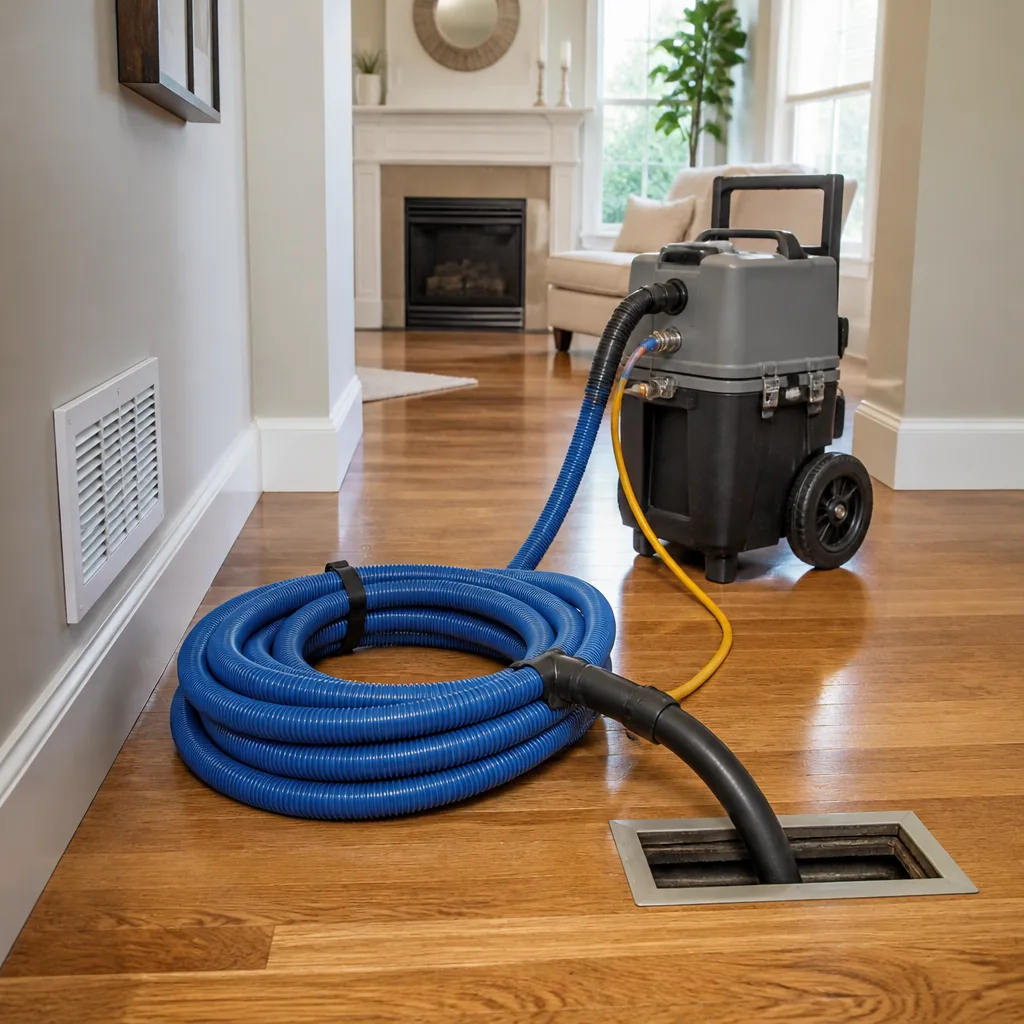 Whole-home duct cleaning
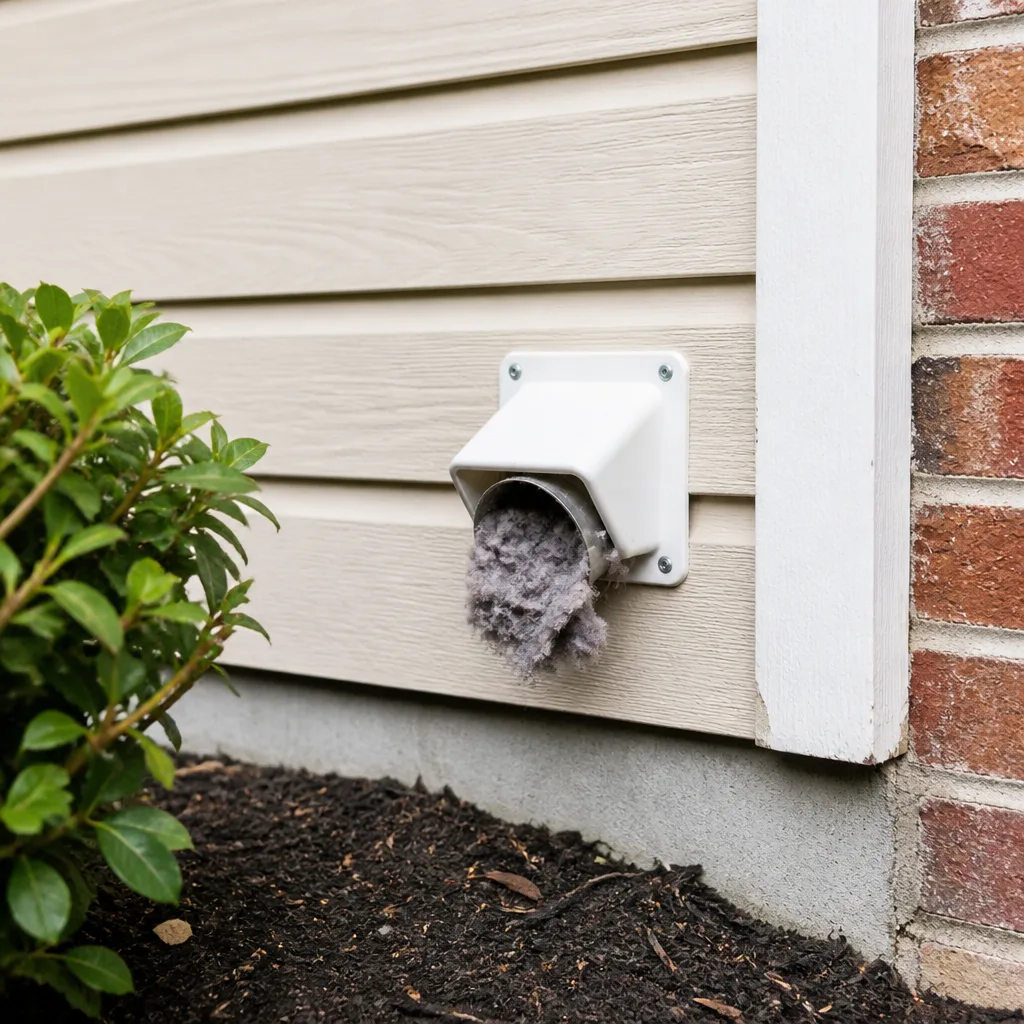 Dryer vent cleaning
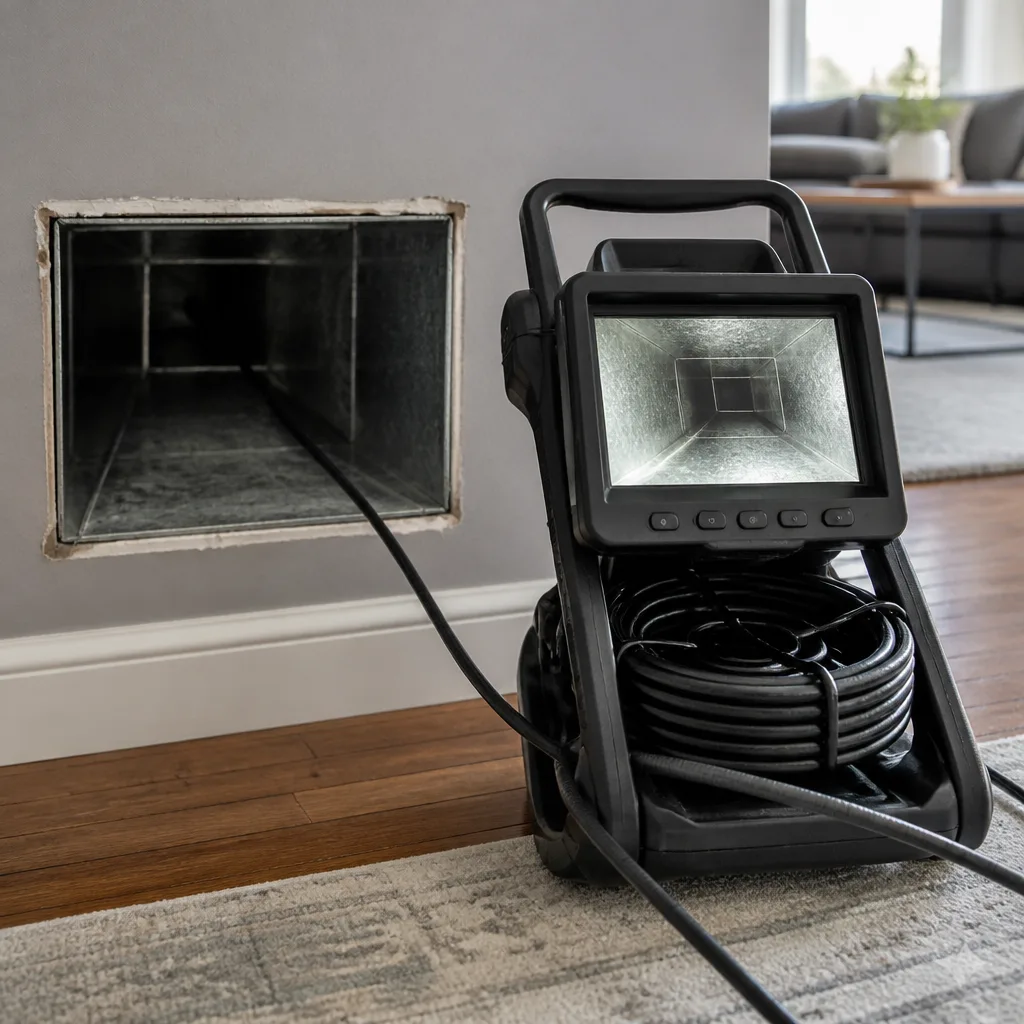 Camera inspection
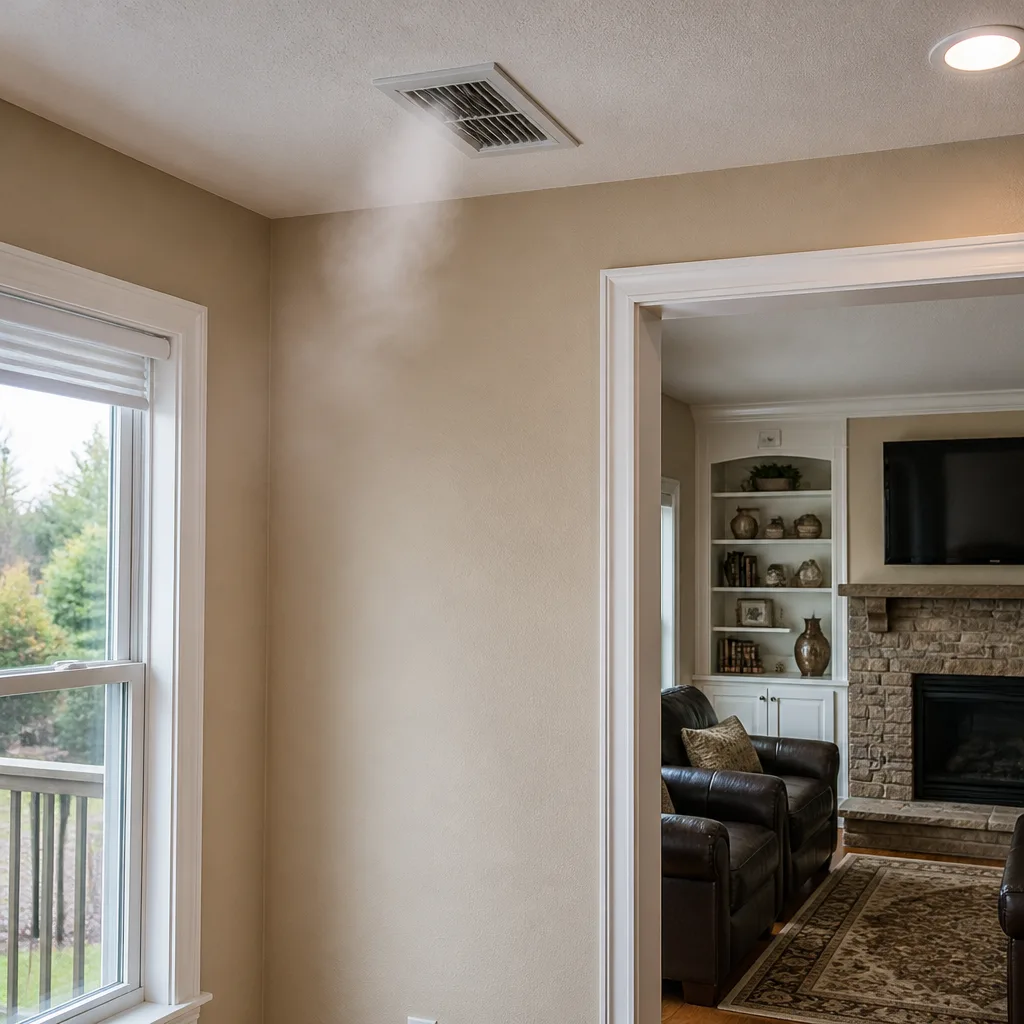 Sanitizing & deodorizing
Whole-system duct and dryer vent check with before-and-after photos - you see exactly what came out of your vents
That "$99 whole-house special" is a bait ad - the real number appears once they are in your hallway, or the "clean" is a shop-vac at the register. We photograph the inside of your ducts before and after instead.
DIY vs Professional Air Duct Cleaning: The Erie Homeowner’s Decision Guide
Every DIY duct cleaning guide recommends the same two things: a shop vac and a dryer vent brush. What they leave out is the physics. A consumer shop vac pulls roughly 150 cubic feet per minute of suction. A Nikro industrial unit moves around 6,000 CFM. That gap isn’t a matter of the job going a little faster. It’s the difference between extracting debris and simply stirring it up. Without real negative pressure holding the whole system under vacuum, you’re not cleaning ducts. You’re redistributing whatever settled deep inside them into the air your family breathes. This guide breaks down what the pressure difference actually means, what you can safely do yourself, what you shouldn’t touch, and when it’s time to bring in an Erie professional.
Quick Answer
DIY air duct cleaning is safe and useful for surface-level tasks like wiping return grilles, vacuuming registers, and swapping filters, but it cannot extract the compacted debris and settled buildup deep inside the duct runs. Professional cleaning relies on industrial negative-pressure equipment that holds the entire system under vacuum while mechanical brushes loosen debris, which consumer-grade tools can’t replicate. For most Erie homes, especially newer construction with long duct runs and multiple zones, professional cleaning is the only method that actually removes what’s accumulated rather than moving it around.
Styles & brands we work with
- Whole-home duct cleaning
- Dryer vent cleaning
- Camera inspection
- Sanitizing & deodorizing
Table of Contents
- Why Negative Pressure Is the Whole Ballgame
- The CFM Gap: Consumer Vacuums vs. Industrial Equipment
- What You Can Legitimately Do Yourself
- When DIY Makes a Professional Cleaning Harder
- Why Erie Homes Are Poor DIY Candidates
- The Real Cost Comparison: DIY vs. Professional
- What Professional Cleaning Actually Involves
- Common Mistakes to Avoid
Why Negative Pressure Is the Whole Ballgame
Air duct cleaning has one non-negotiable principle: you have to hold the system under negative pressure before you touch anything inside it. Negative pressure means the pressure inside the ducts is lower than the pressure in the room, so air flows into the ducts rather than out of them. When a technician connects an industrial vacuum to the main trunk line and seals the other openings, every brush stroke, every dislodged clump of dust, gets pulled toward the vacuum instead of drifting into the living room.
Here’s what most homeowners don’t realize: without that vacuum seal, the moment a brush touches settled dust inside a duct, that dust becomes airborne. It has to go somewhere. If the system isn’t under negative pressure, it goes into your rooms. Not all at once, and not dramatically. It settles onto surfaces, into carpets, and back into the return air stream to be pulled through the furnace and blown out again.
This is why a professional job starts with containment, not with a brush. Our technicians use Abatement Technologies containment systems to seal off the working area and prevent dislodged debris from recirculating during cleaning. That approach matters most for homes where someone has allergies or asthma, because the point is to remove the irritants, not to relocate them.
In our experience, the single biggest reason a DIY attempt falls short isn’t effort. It’s that a homeowner has no way to generate the pressure differential across a whole-house duct system using consumer equipment. Setting up proper negative pressure on a multi-run residential system takes equipment that doesn’t fit in a garage, and it takes training to know where to connect it and where to seal.
There’s also a safety angle. Ductwork on many Erie homes runs through unconditioned attic space or tight crawl areas. Working inside duct runs, climbing into attic cavities, and handling electrical components near the air handler all carry real risk. A trained professional knows how to work around a furnace’s electrical connections and gas lines safely. We’re not going to walk you through a DIY approach that puts you near an air handler’s electrical panel or a gas furnace connection. That’s work for someone who does it every day.
The CFM Gap: Consumer Vacuums vs. Industrial Equipment
CFM stands for cubic feet per minute, and it’s the measure of how much air a vacuum can move. This number is the difference between a shop vac and the equipment pros use, and the gap is far wider than most people assume.
- Consumer shop vac: roughly 150 CFM of suction at the hose end.
- Nikro industrial duct cleaning unit: roughly 6,000 CFM.
- The ratio: about 40 to 1 in raw air movement.
What does 40 times more airflow actually buy you? It buys the ability to hold an entire residential duct system under vacuum at once. A shop vac taped to a single register pulls a little air through that one branch and leaves the rest of the system at room pressure. A 6,000 CFM unit connected to the main trunk pulls air through every branch simultaneously, so a brush working its way down a distant run has something pulling the loosened debris toward the collection point.
It also buys the ability to do mechanical agitation properly. Our technicians run Rotobrush and Nikro systems, both of which are designed for duct interiors: rotating brush heads and air whips that scrub the duct walls while the vacuum is running. Consumer brushes and shop vac wands don’t work that way. They scrape the top layer and let the vacuum catch whatever happens to fall loose.
Think of the difference as similar to sanding wood without a dust collector. The sandpaper works. The dust goes everywhere. With real extraction, the same sandpaper strokes leave a clean surface and the dust ends up in a bag. The tool matters because the physics of the whole job depend on it.
What You Can Legitimately Do Yourself
We’re not going to tell you there’s nothing you can do. There’s plenty, and doing it well makes a professional cleaning more effective when you do schedule one. Here’s what’s actually worth your Saturday morning.
- Clean your return grilles and supply registers. Remove each grille, wash it in the sink or hose it off outside, dry it fully, and put it back. Dust builds up on the fins and face of the grille and, once it’s thick enough, gets pulled into the duct behind it. Wiping the accessible throat of each register boot with a damp cloth catches what’s already within arm’s reach.
- Inspect your dryer vent connection. Pull the dryer out far enough to see the vent hose and the wall connection. Look for kinks, crush points, lint accumulation at the transition, and a hose that’s been pushed too far onto the duct. This is an inspection, not a full cleaning. Anything past the wall is out of DIY territory.
- Upgrade your filter (correctly). A properly sized pleated filter in the MERV 8 to MERV 11 range (MERV is the filter rating scale) traps far more fine dust than a cheap fiberglass filter, and it protects the blower and coil. Match the filter’s MERV rating to what your system can handle. Very high MERV filters can restrict airflow on some residential systems, so check the furnace’s rating rather than assuming higher is always better.
- Keep the return side clear. Make sure furniture, rugs, and boxes aren’t blocking return grilles. A blocked return starves the system, increases static pressure, and makes every other problem worse.
- Vacuum the area around the air handler. Dust that collects around the furnace and coil cabinet eventually gets pulled into the system. A HEPA vacuum and a clean surface around the unit reduce that load.
- Schedule a walk-through with a mirror. If your system has accessible flexible duct in the attic, you can visually check a short section with a flashlight and a mechanic’s mirror. If you see torn insulation, disconnected sections, or heavy buildup, stop poking and get it on a professional’s list.
Notice what’s not on this list: sticking anything down the main trunks, brushing past the first elbow, or trying to clean the interior of the air handler. Those are the jobs that require real equipment and, candidly, the jobs where a well-intentioned DIY attempt often causes more harm than good.
When DIY Makes a Professional Cleaning Harder
This is the part nobody warns you about. A DIY attempt isn’t just less effective. Sometimes it makes the follow-up professional job genuinely more difficult, and more expensive, than if you’d left the system alone.
- Compacted debris at the bottom of horizontal runs. If you push a shop vac wand or a brush down a horizontal run and stir up the settled layer, you can drive loose material deeper into the run where it compacts against a fitting or a sag. What was once removable as a coherent clump becomes a hard, packed deposit that a professional brush has to break up before it will move. That’s extra labor.
- Disturbed or torn interior insulation liners. Many residential ducts are lined on the inside with fiberglass insulation. Pushing a stiff brush or a rigid shop vac wand down that duct can snag the liner and tear it. Once torn, the liner’s fibers can enter the air stream, and the duct needs repair, not just cleaning. That’s a much bigger job.
- Disconnected joints and flex duct pulled loose. Flexible duct is held together at fittings with minimal tolerance. Dragging a heavy shop vac hose through it stresses joints and connections. A disconnected branch in an attic means air is dumping into unconditioned space, and someone has to crawl back up there to fix it.
- Debris redistributed into the system and the living space. If a DIY attempt pushes dust past a return and it settles downstream, a professional now has more debris spread over a larger area. The cleaning takes longer and covers more of the system.
- Grille and register damage. Over-tightening screws, bending fins, and forcing grilles out of tight frames causes damage that has to be repaired before the system can be sealed back up properly.
In our experience, a system that’s been partially “cleaned” by a homeowner is often the one that takes the extra pass on the brush rig. If you’ve already tried and it didn’t work, that’s a normal thing to tell us. It just means we plan the visit for what we’re actually going to find.
Why Erie Homes Are Poor DIY Candidates
Erie has grown fast, and a lot of the housing stock reflects that. Newer construction typically brings longer duct runs, more branches, and multi-zone systems where the air handler feeds two or three distinct zones through separate trunk lines and dampers. That layout multiplies the pressure problem that makes DIY cleaning fail.
Here’s the reasoning. A single-zone, compact system has short runs and fewer branches, so a shop vac gets a little traction on the closest runs even though it can’t reach the far ones. A modern Erie home with a two-story layout and multiple zones has long trunk runs serving distant branches, and the suction falls off with every elbow and every foot of duct. By the time a consumer vacuum reaches the end of the longest run, the airflow is essentially gone. Whatever is settled there stays there.
Erie’s climate adds another layer. Cold winters mean the furnace runs hard for months, and the air handler is moving a lot of air through those ducts. The combination of prolonged heating seasons and a system that never fully depressurizes is exactly the condition that lets dust, dander, and debris accumulate in the far reaches of a long-run system. When that buildup does get disturbed, it gets distributed across the whole house rather than captured.
Construction is also a factor. New-build subdivisions in and around Erie routinely follow a renovation or move-in period where drywall dust and construction debris have been pulled through the return system. That fine, powdery material is especially difficult to extract without industrial negative pressure because it re-enters the air stream so easily. A shop vac actually makes it worse, because it aerates the dust without capturing it.
For homes in Erie with long-run, multi-zone systems, professional cleaning is the only approach that reaches the far branches. You can read more about how we handle that work on our air duct cleaning page.
The Real Cost Comparison: DIY vs. Professional
Price is usually the reason people ask the DIY question in the first place, so let’s be honest about it. A shop vac is a few hundred dollars, a dryer vent brush kit runs well under $100, and you already own a ladder. On paper, that’s a fraction of a professional cleaning. On paper is the key phrase.
A fair comparison has to account for what you’re actually buying and what a DIY attempt costs when it goes sideways.
- Equipment rental. If you want anything close to professional suction, you’re looking at renting an industrial vacuum or a duct cleaning setup. Rental fees for that equipment, plus the brushes, plus the containment materials, plus a day of your time, add up fast. Most homeowners who price it out find the rental total is a meaningful fraction of a professional service.
- Your time. A real residential cleaning job takes a trained technician a substantial part of a day. For a homeowner doing it for the first time, figure on double or triple that, plus time spent learning the equipment and setting up containment. That weekend is gone.
- The probability of incomplete cleaning. This is the hidden cost that matters most. A DIY attempt that reaches half the system still leaves the other half dirty. You’ve paid with your time and your equipment rental and you don’t have a clean system. The next step is calling someone anyway, and now the job takes longer.
- Repair costs. Torn interior liners, disconnected joints, damaged registers, and compaction of debris all create repair work. Duct repair and sealing is a real line item, and it’s avoidable damage in most cases.
- Lost efficiency. A system that stays dirty moves less air, works harder, and costs more to run. That’s a slow, invisible cost that shows up on your utility bill.
None of this argues against doing the maintenance you can legitimately do yourself. It argues for recognizing that full-system extraction is a different task, requiring different equipment, and that the equipment and training are what you’re paying for. A professional cleaning also gets you repair and sealing alongside the cleaning, so a leak or torn duct found during the work is dealt with on the same visit rather than turned into a separate contractor appointment.
We also want to name the thing that pushes people toward DIY in the first place: the fear of a bait-and-switch quote. A low teaser price that balloons into a huge invoice once the technician is on site is exactly the reputation this industry has to work against, and it’s why somebody reaches for the shop vac instead. We don’t work that way. You get one flat price per system, agreed before any work starts, with no per-vent pricing, and before-and-after photos of your own ducts so you can see what changed. The estimate is free, and the written estimate sets the final price. If the price is what’s worrying you, ask us for it before you buy anything.
What Professional Cleaning Actually Involves
Knowing what a professional visit looks like makes it easier to judge quotes and to spot a job that’s being done properly versus one that isn’t. Here’s how a full-system cleaning breaks down.
- Walk-through and system mapping. We look at the furnace, the air handler, the return and supply runs, and the branch layout. We identify any zones, accessible duct in attic or crawl space, and any problem areas we can see before any equipment comes in.
- Containment and vacuum connection. The working area gets contained, and the industrial vacuum connects to the main trunk with other openings sealed, so the whole system comes under negative pressure before anything inside gets disturbed.
- Mechanical agitation. Rotobrush and Nikro brush heads and air whips travel the runs, scrubbing duct walls and pulling debris toward the collection point. This is the step that does the actual cleaning, and it’s the step that only works with real negative pressure.
- Component cleaning. The blower, the coil, the drain pan, and the air handler cabinet get cleaned as part of the system. Our HVAC cleaning work covers these components, because cleaning the ducts without cleaning the equipment that moves the air leaves half the job undone.
- Repair and sealing. Any leaks, torn liners, or disconnected joints found during the work get repaired and sealed, so the system you’re left with is intact and efficient.
- Sanitizing. Where it’s appropriate, an air quality and sanitizing treatment addresses what’s living on duct surfaces. We use products from Honeywell and Aprilaire, both established names in HVAC filtration and air treatment, rather than off-the-shelf sprays.
- Verification and photos. We photograph the ducts before and after so you can see the difference yourself. You shouldn’t have to take our word for it that the work was done.
There’s a second service in this visit’s family that most duct cleaners treat as an afterthought: dryer vent cleaning. It’s one of our core services, not an upsell, because a lint-clogged dryer vent is a real household fire hazard. If the dryer is taking too long to dry a load, that’s a signal worth acting on. You can learn more about the company and the full range of services on our Erie Air Duct Cleaning Pros home page.
Common Mistakes to Avoid
- Trusting a shop vac to clean a whole-house system. A consumer vacuum can’t generate the pressure differential a full duct system needs. It stirs dust without capturing it, and the dust ends up back in your living space. If professional extraction isn’t in the budget, stick to the DIY tasks above and leave the trunks alone.
- Pushing a brush past the first elbow. Long, rigid brushes and wands damage interior liners and disconnect flex joints far more often than homeowners expect. On a modern Erie home with long attic runs and tight fittings, the damage risk is high and the repair cost is real.
- Assuming a wet or damp shop vac is fine for duct work. Moisture in a duct system creates conditions for microbial growth. Never introduce water or a wet vacuum into ductwork. If you suspect moisture in the system, that’s a diagnostic call, not a cleaning one.
- Skipping containment. Even on a small DIY register cleanup, wear a mask and keep a HEPA vacuum running nearby. Without containment, the dust you stir is the dust you breathe.
- Forgetting the dryer vent entirely. A lot of homeowners clean the ducts and never look at the dryer vent, which is the higher fire-risk component of the two. Lint accumulation is the leading cause of dryer fires, and it’s the part of the system that most DIY guides gloss over.
- Choosing a quote based on the headline price alone. A low teaser price that grows into a much larger invoice is the industry’s classic trap. Ask for a flat per-system price, in writing, before the technician arrives.
- Buying high-MERV filters without checking the furnace rating. A filter too restrictive for the blower can reduce airflow and strain the system. Match the filter to the equipment, not to a general rule of thumb.
- Ignoring the air handler while cleaning the ducts. Cleaning the ducts but leaving a dirty blower and coil means dust keeps being reintroduced. The whole air pathway needs to be part of the job.
See the difference
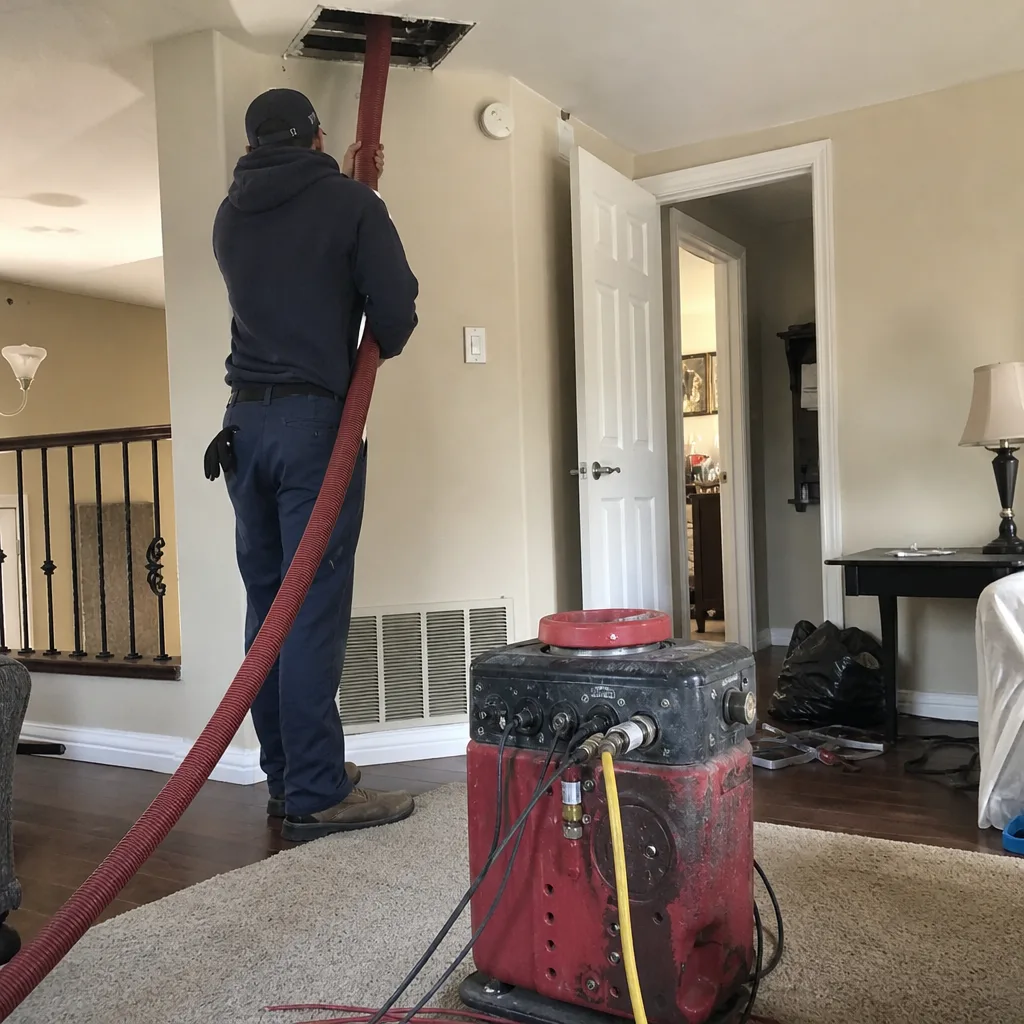 Before
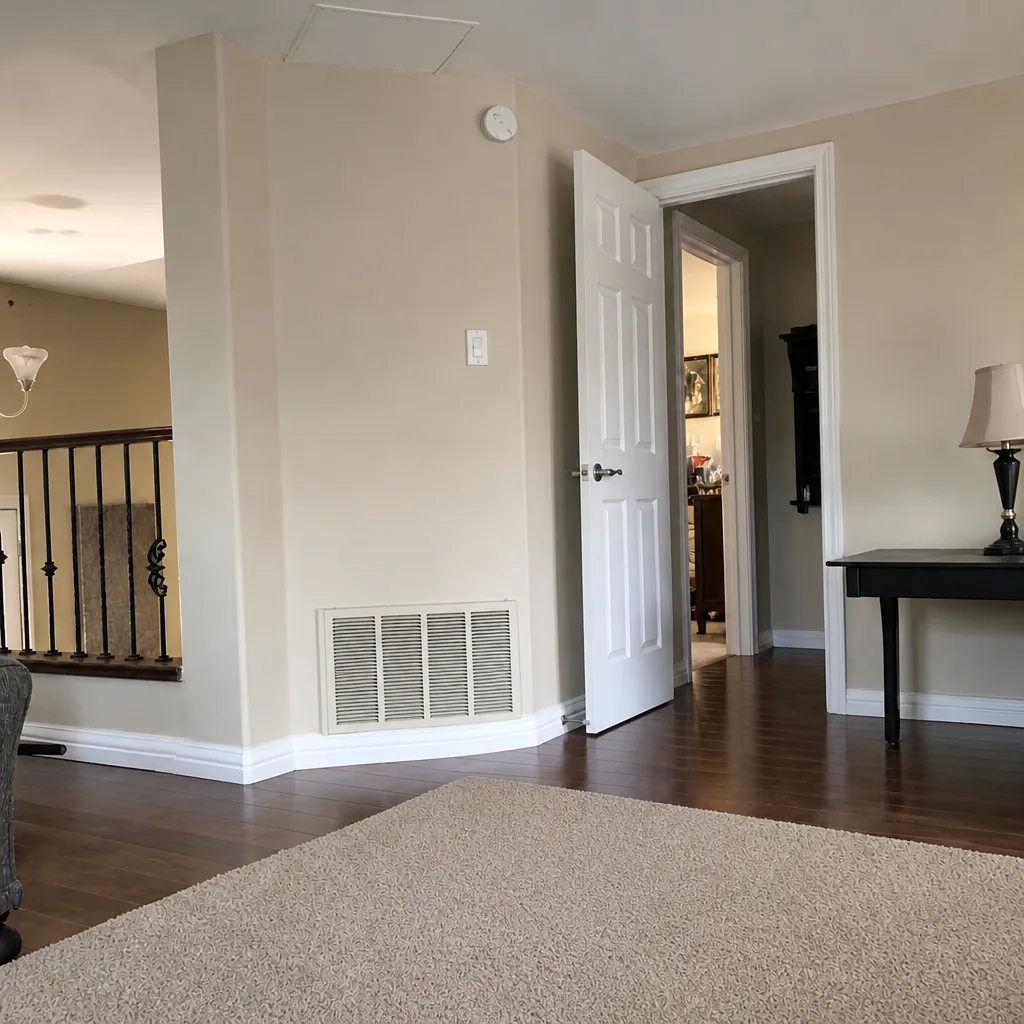 After
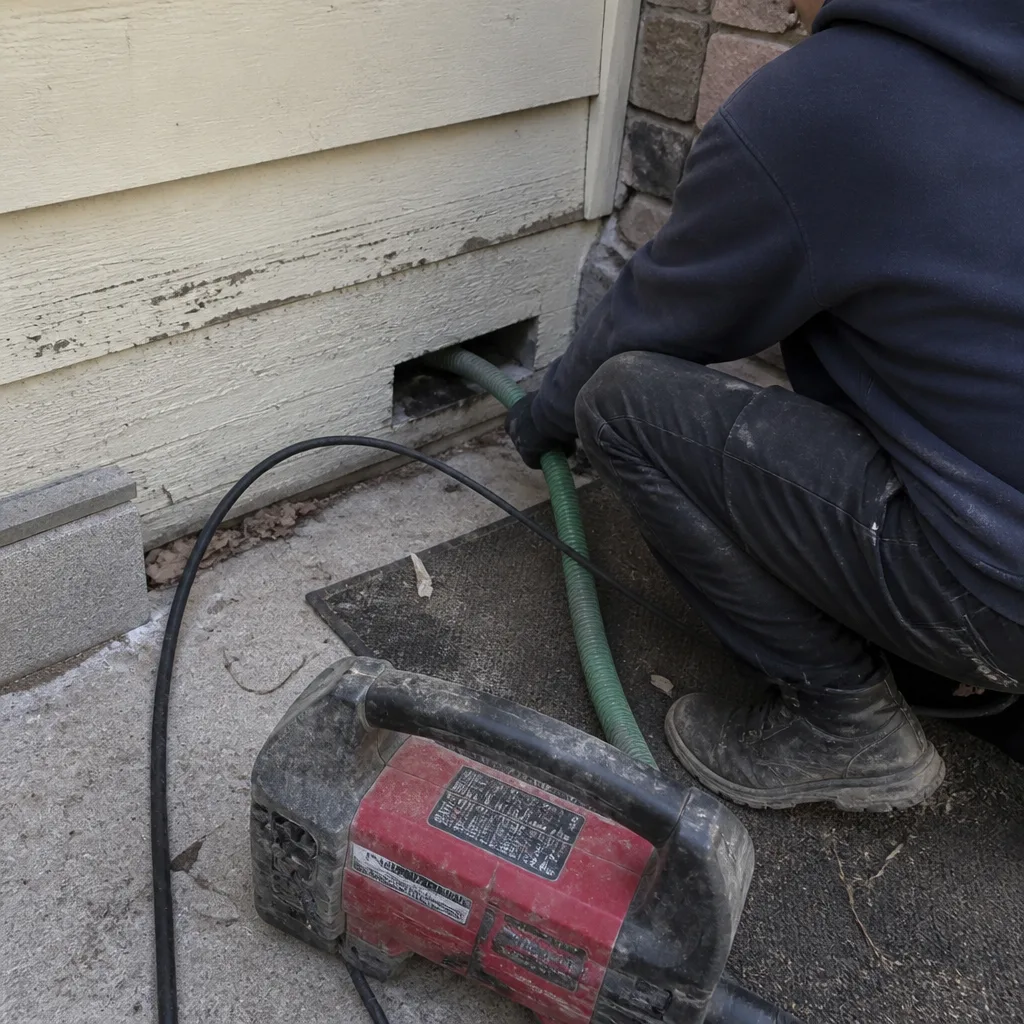 Before
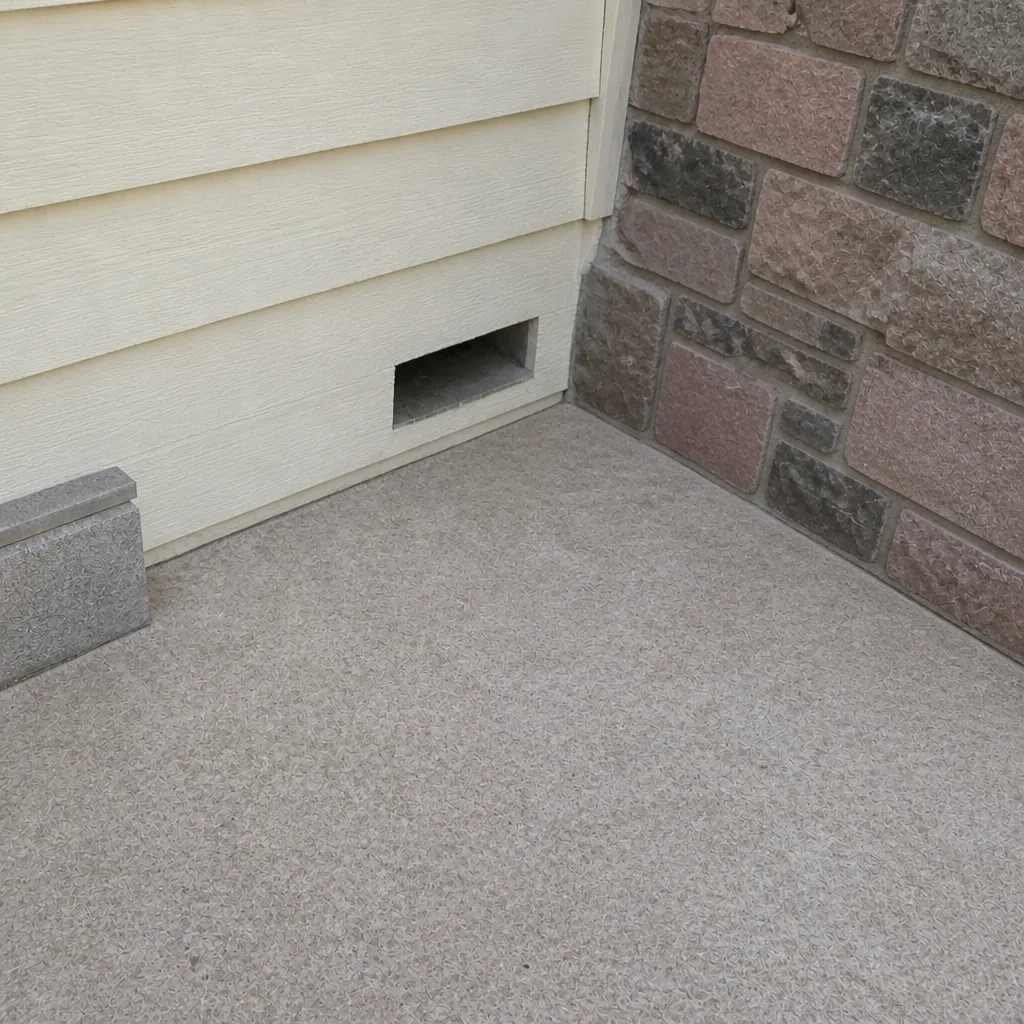 After
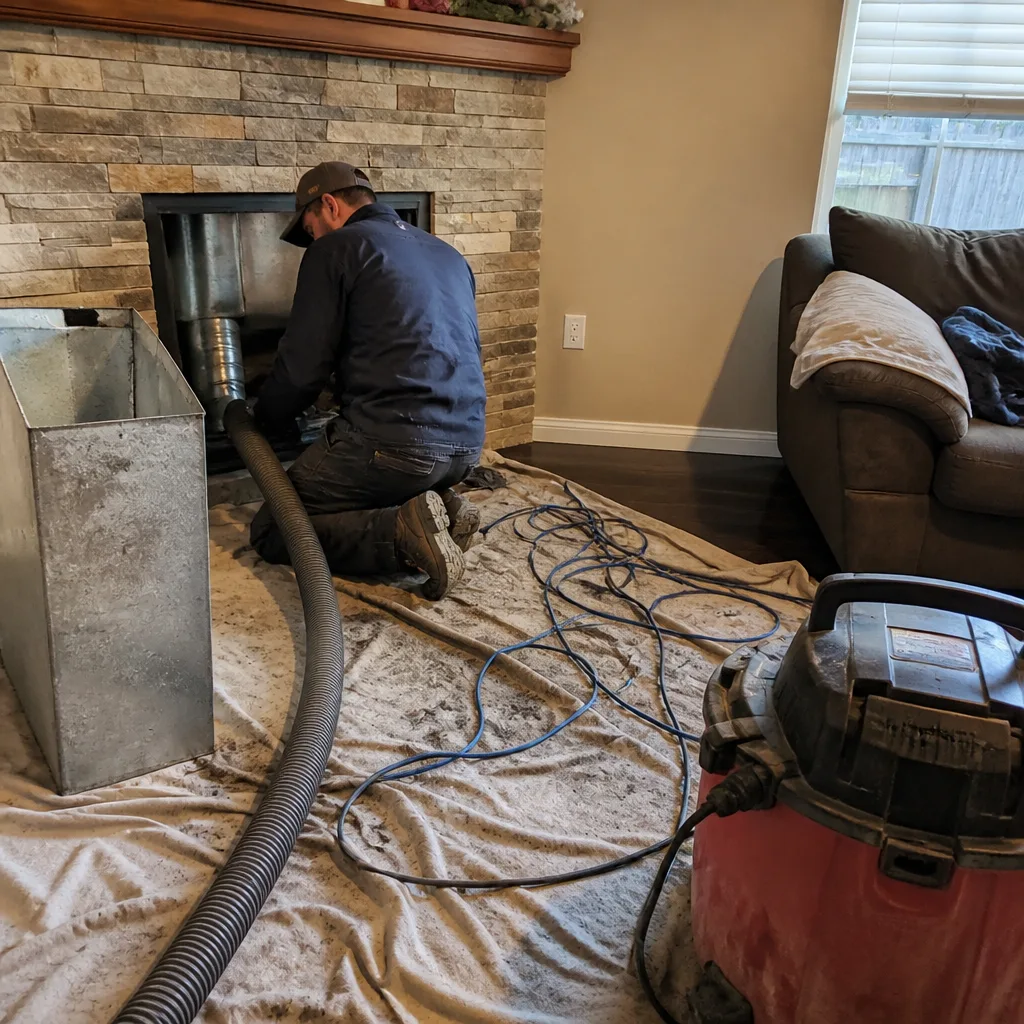 Before
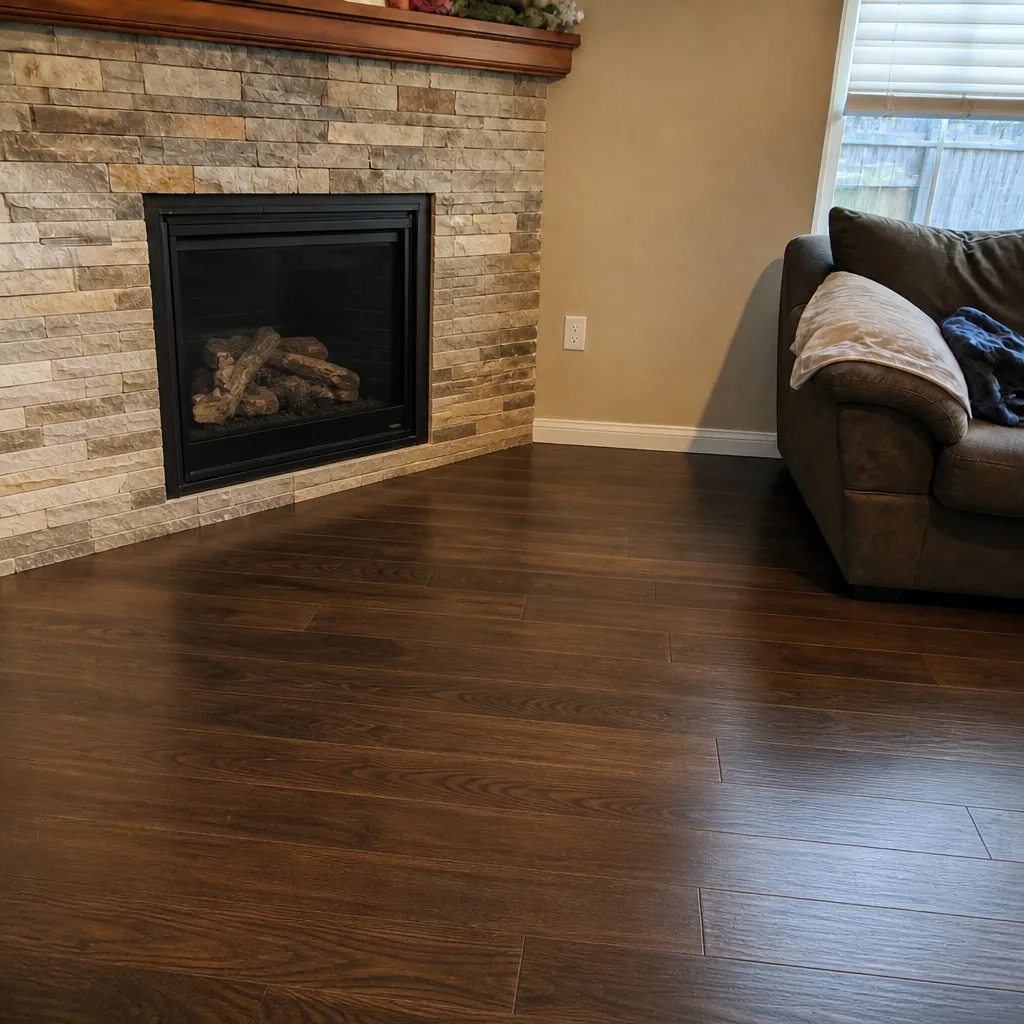 After
When to Call a Professional
If you’re seeing any of the following, it’s time to call. Visible dust blowing from registers after a filter change. Musty or stale smells when the heat or AC kicks on. A recent renovation or move-in where drywall dust or construction debris got pulled through the return. Allergy or asthma symptoms that worsen indoors. A dryer that takes much longer than it used to, or a dryer vent that hasn’t been cleaned in a while. A home with long-run, multi-zone ductwork where DIY suction can’t reach the far branches. Ductwork that’s visibly torn, disconnected, or leaking. Any of these signals is a professional visit, and a professional visit is exactly what we do. Erie Air Duct Cleaning Pros offers free estimates in Erie. Call (877) 676-7132 to get a flat price on your system.
Our technicians have up to 9 years of experience, and they use Rotobrush and Nikro equipment on every job. You’ll get one flat price per system agreed before work starts, before-and-after photos of your own ducts, and the option to have repair and sealing handled on the same visit if we find a problem. The local pro is licensed and insured as their state requires. When you’re ready, the number is (877) 676-7132. We answer 24/7. Fast dispatch from 7am to 7pm, Sunday through Friday.
Frequently Asked Questions
Air duct cleaning is priced per system, not per vent, and the written estimate sets the final price. We quote one flat price for your whole system after a walk-through, so there’s no per-vent math and no surprise line items once the technician arrives. The estimate itself is free. Call (877) 676-7132 for an exact quote.
Low quotes are usually teasers that cover a limited cleaning, with the real price appearing once the technician is on site. Cheap quotes often reflect consumer-grade equipment, no containment, and no repair or sealing capability, so the “cleaning” is a surface pass that leaves most of the system untouched. We give one flat price per system before work starts, with before-and-after photos so you can see what you paid for. Call (877) 676-7132 for an exact quote.
Ask for before-and-after photos of your own ductwork. We photograph the system before and after cleaning so the difference is visible, not just described. If a quote doesn’t include verification, that’s worth asking about before you book. Call (877) 676-7132 to ask how we document the work.
Most homes don’t need frequent cleaning. A reasonable baseline is every few years for a typical household, sooner if you’ve had a renovation, a move-in, pets, allergies in the home, or heavy dust buildup. Homes that recently went through construction or drywall work should be cleaned once the work is done, because fine construction dust is pulled straight into the return system. Call (877) 676-7132 to talk through your situation and get an exact quote.
Yes, it can. Rigid wands and brushes pushed past the first elbow can tear interior insulation liners, disconnect flex joints, and compact debris at the bottom of horizontal runs, all of which increase the cost and scope of a follow-up professional cleaning. Consumer equipment also lacks the negative pressure needed to contain what it stirs up, which redistributes dust into the living space. Keeping a shop vac to register and grille surfaces is the safe DIY use. Call (877) 676-7132 if you’re unsure what your system has already been through.
Dryer vent cleaning is one of our core services, not an add-on. A clogged dryer vent is a real fire hazard and a common cause of dryers taking far too long to dry a load, and it deserves the same professional attention as the duct system. If your dryer runs long or you haven’t had the vent looked at, it’s worth scheduling. Call (877) 676-7132 to add it to a duct cleaning visit.
The Bottom Line
The DIY vs. professional question comes down to negative pressure. Without it, cleaning ducts isn’t cleaning, it’s redistributing settled debris from deep in the system back into your living space. Consumer equipment can handle register surfaces, dryer vent inspection, and filter upgrades, and those are worth doing. But full-system extraction depends on the airflow differential that only industrial-grade equipment can create, and modern Erie homes with long-run, multi-zone ductwork are exactly where DIY falls shortest. If you’ve already tried and want to know what it’ll take to finish the job properly, we can tell you.
Erie Air Duct Cleaning Pros uses Rotobrush and Nikro equipment, Abatement Technologies containment, and air quality products from Honeywell and Aprilaire. We clean the full air pathway, and if we find a leak or damage while we’re in there, we can seal and repair it on the spot. One flat price per system, agreed before work starts, with before-and-after photos of your own ducts. The local pro is licensed and insured as their state requires. Call (877) 676-7132 for a free estimate. We answer 24/7. Fast dispatch from 7am to 7pm, Sunday through Friday.
Written by the team at Erie Air Duct Cleaning Pros.