
Last updated November 25, 2026
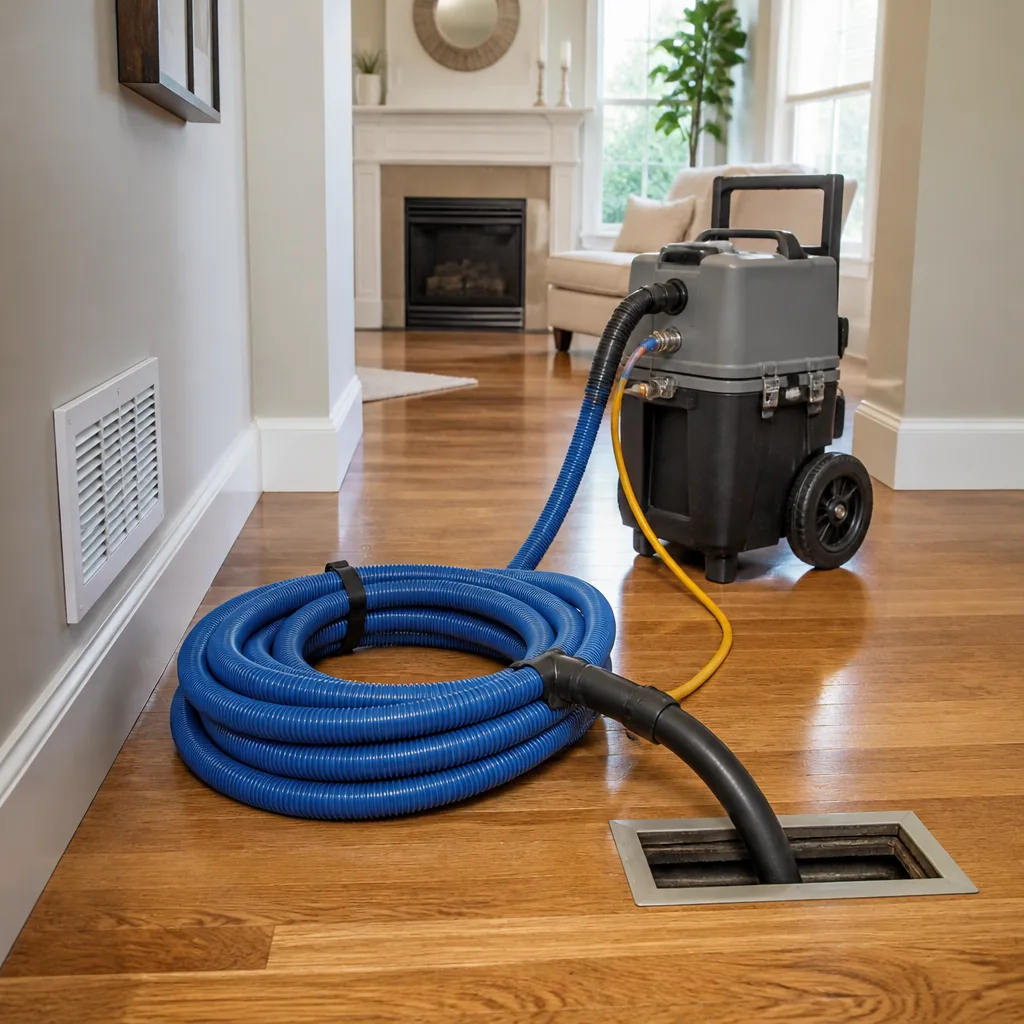 Whole-home duct cleaning
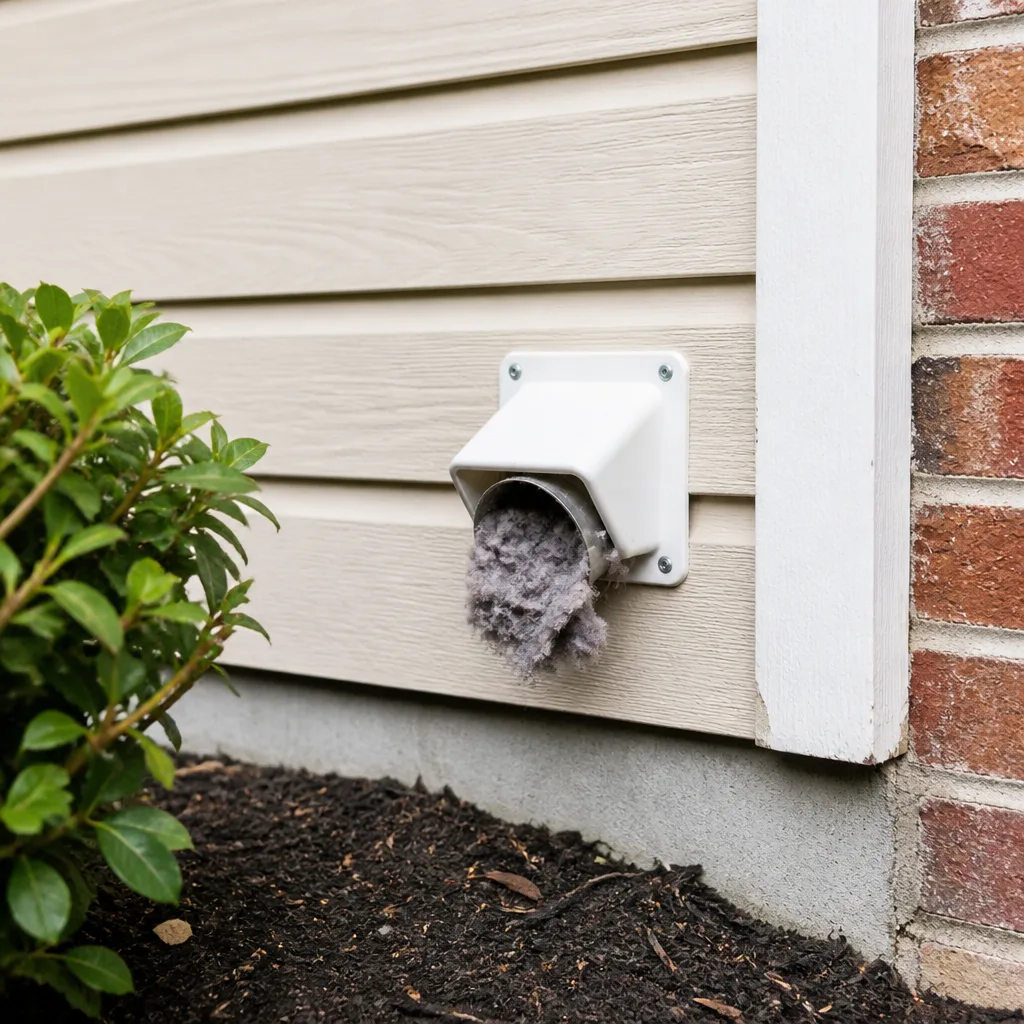 Dryer vent cleaning
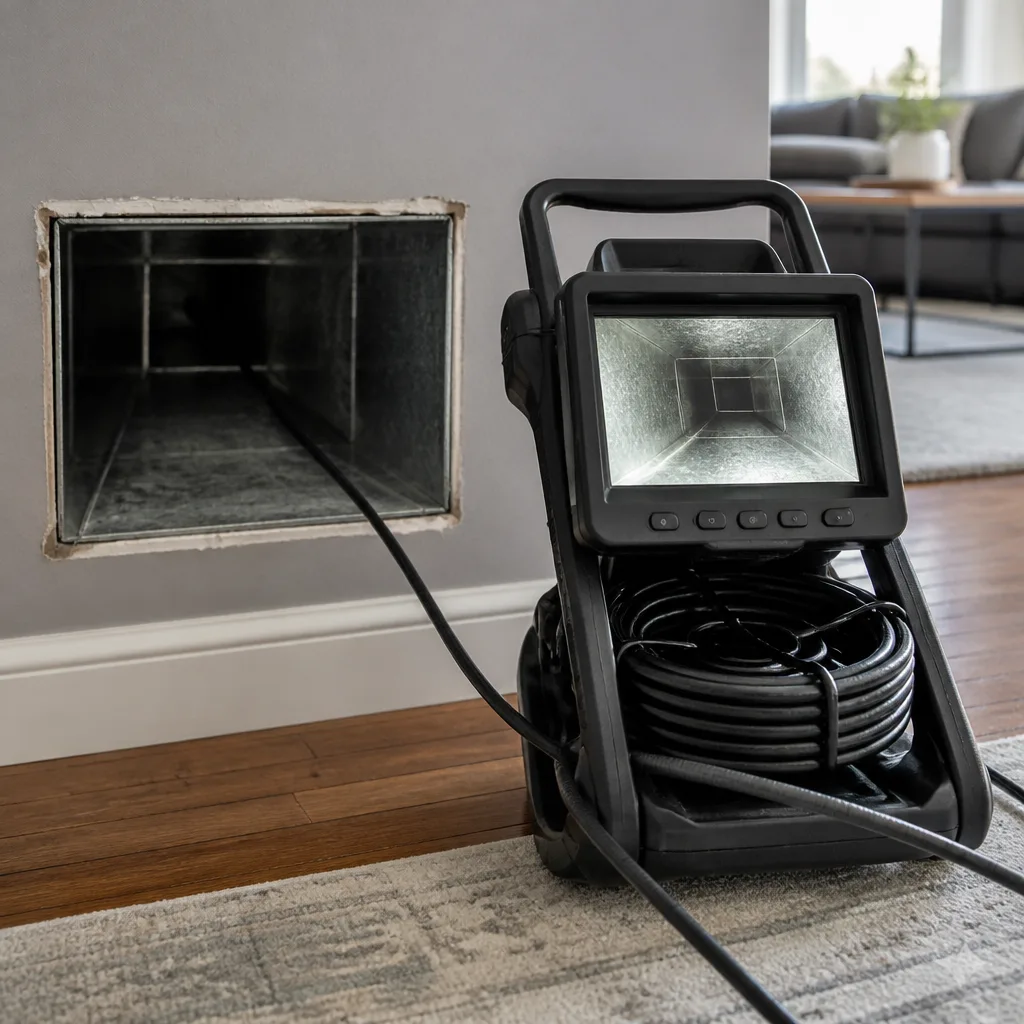 Camera inspection
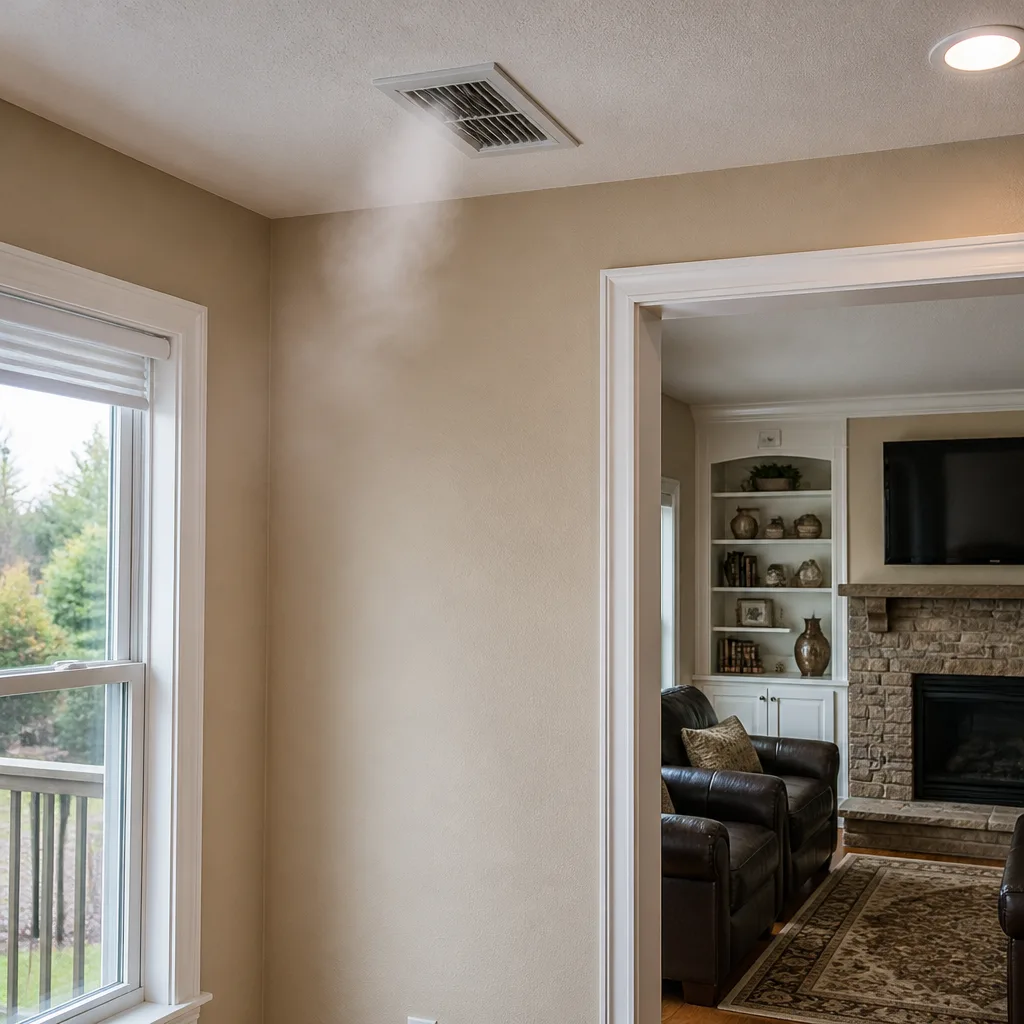 Sanitizing & deodorizing
Whole-system duct and dryer vent check with before-and-after photos - you see exactly what came out of your vents
That "$99 whole-house special" is a bait ad - the real number appears once they are in your hallway, or the "clean" is a shop-vac at the register. We photograph the inside of your ducts before and after instead.
Air Duct Cleaning Warning Signs: An Erie Homeowner’s Reference Guide
Visible dust on a supply register doesn’t always mean your ducts are dirty. It can mean air is escaping a collapsed flex section a few feet upstream, pulling insulation dust along with it. The symptom and the cause are rarely the same thing, and misreading them leads to a cleaning that doesn’t fix what’s actually wrong. This guide maps the signs Erie homeowners notice back to the mechanical causes inside the duct system. You’ll learn to separate a dirty-duct problem from an airflow or pressure problem, what a musty smell usually points to, and why some rooms never heat evenly no matter what you set the thermostat to.
Quick Answer
Air duct cleaning is worth considering in Erie when you notice consistent dust on registers, a musty odor from vents, uneven room temperatures, or debris being pulled into vents rather than blown out. The key is matching the symptom to its cause first. Dust on a register can signal a leak rather than a dirty duct, and a musty smell usually traces to the cooling coil or drain pan, not the duct lining.
Styles & brands we work with
- Whole-home duct cleaning
- Dryer vent cleaning
- Camera inspection
- Sanitizing & deodorizing
Table of Contents
- Symptom vs. Cause: Why the Two Rarely Match
- Dirty Ducts vs. an Airflow Problem Cleaning Won’t Fix
- What a Musty Odor From Your Vents Actually Means
- Uneven Room Temperatures and Their Duct Causes
- Increased Allergies in One Room: Return Air and Filter Bypass
- Debris Blowing Out vs. Debris Being Pulled In
- Dryer Vent Warning Signs Erie Homeowners Overlook
- What a Professional Inspection Actually Checks
Symptom vs. Cause: Why the Two Rarely Match
The most useful thing we can tell an Erie homeowner is this: the sign you notice and the problem that needs fixing are often not in the same place. Dust on a ceiling register looks like a dirty duct. It can also be a supply branch that’s leaking at a joint, and the dust is fine insulation and drywall particles being drawn into the airstream and deposited at the first rough surface. Clean the duct and the dust returns in a month, because the leak is still there.
This is why a symptom-first approach works better than a checklist approach. A generic warning-sign list tells you something might be wrong. It doesn’t tell you which part of the system to look at. As a full-system indoor air specialist, we treat every call as a diagnostic question before it becomes a cleaning job. Three things determine the answer:
- Where the symptom shows up. One register or every register in the house points in completely different directions.
- What the symptom looks like. Coarse dust, fine gray powder, streaks, odor, or nothing visible at all.
- When it shows up. Only during heating, only during cooling, or year-round regardless of mode.
If the same symptom appears at every register, the cause is usually central: the blower, the filter, a main trunk, or the coil. If it’s isolated to one or two registers, the cause is almost always local to that branch. That single distinction saves Erie homeowners from the most common mistake in this trade, which is paying for a whole-house cleaning when the real problem is one collapsed flex run in an attic.
Erie’s dry summers and cold winters put duct systems through real temperature swings. Flexible duct in an unconditioned attic contracts in winter and softens in summer heat, and that cycling is hard on taped joints and fittings. It’s one reason we see a lot of small leaks in town that homeowners attribute to dirt.
Dirty Ducts vs. an Airflow Problem Cleaning Won’t Fix
This is the distinction that matters most when you’re deciding whether to schedule anything at all. A dirty duct problem is about what’s inside the duct: settled dust, construction debris after a remodel, or years of accumulated particles. An airflow problem is about the duct’s shape and condition, and no amount of vacuuming changes it. Cleaning a collapsed or disconnected duct simply gives you a clean duct that still can’t move air.
Here’s how to tell them apart before you call anyone:
- Watch a tissue at the register. Hold a tissue near a supply register with the system running. Strong flutter suggests airflow is fine and the issue is contamination. A weak flutter or none suggests a delivery problem.
- Compare supply outlets. If one room’s register moves noticeably less air than the rest, the problem is in that branch, not the whole system.
- Listen at the grill. A whistling or rushing sound at one register often means a restricted or undersized branch. A whooshing at the air handler can mean a filter or blower restriction.
- Check the filter slot. A filter that won’t seat, or air you can feel escaping around the edges, means bypass air. That’s a sealing issue, not a cleaning issue.
- Look for kinked flex. Where you can safely see flex duct, sharp bends and crushed sections kill airflow. Don’t go crawling through an attic yourself; note what you can see from the access.
For a deeper walkthrough of what a proper cleaning covers, see our guide to air duct cleaning. What’s worth knowing here is that we repair and seal ducts alongside cleaning. If we find a leak or damage while we’re in there, we can seal and repair it on the spot rather than handing you a note and another contractor’s number.
What a Musty Odor From Your Vents Actually Means
A musty smell from your vents usually comes from the evaporator coil or the condensate drain pan, not the duct lining. The coil stays wet during the cooling season. When airflow across it drops or the drain pan doesn’t fully empty, that moisture becomes a place for biological growth, and the blower moves that smell through the whole house. Cleaning the ducts alone rarely clears it. The source has to be addressed.
Mechanically, here’s the chain of events:
- The coil is cold and wet by design. That’s normal.
- A clogged drain line or a pan pitched the wrong way leaves standing water.
- A dirty filter or a partially blocked coil reduces airflow, so moisture doesn’t evaporate off the fins between cycles.
- Growth develops on the coil face or in the plenum, and the airstream picks it up.
- The smell reaches every room the supply ducts feed.
If the odor is stronger in some rooms than others, or appears only when the fan runs, that supports a coil or plenum source. If it’s strongest in a basement or crawlspace near the air handler, check for dampness around the unit itself. If the smell is present even with the fan off, look at the space where the ducts run; a damp crawlspace can wick moisture into flex duct through its outer jacket.
Our answer to odor problems is to clean and sanitize the full pathway, including the coil and plenum, using products from Honeywell, Aprilaire, and Abatement Technologies. We also use Abatement Technologies containment equipment so dislodged material doesn’t recirculate into the living space during the work. For households with allergies or asthma, that containment step matters as much as the cleaning itself.
Uneven Room Temperatures and Their Duct Causes
A room that never gets comfortable usually has one of three duct problems: a collapsed flex section, a disconnected takeoff at the trunk, or a damper that’s closed or partially closed. Cleaning won’t fix any of them. Diagnosis will. And in Erie, where the temperature swing between July and January is wide, uneven rooms become obvious fast because the system is asked to work hard in both directions.
Take a systematic look at the offending room:
- Check the damper. Many branch runs have a manual damper at or near the takeoff. If it’s been turned closed for a previous owner’s comfort preference, that room has been starved of air ever since.
- Confirm the register is open and unobstructed. Furniture, rugs, and closed doors all get blamed on the ducts.
- Test the door. A closed door in a room with a supply but no return pressurizes the room and chokes its own airflow. Undercutting the door is a real fix.
- Look for a disconnected takeoff. Where a branch leaves the main trunk, taped connections can fail. Air escapes into the attic or crawlspace and never reaches the room.
- Check for collapsed flex. Flex duct that’s been pinched during installation or crushed by stored boxes can’t carry its rated airflow.
The tell is contrast. A room with a working supply feels air moving even if the temperature is off. A room with a collapsed or disconnected branch often feels completely still. If you’ve got two adjacent rooms with wildly different airflow on the same trunk, that’s a strong pointer to a branch-level problem rather than a system-wide cleaning need.
Our HVAC cleaning work often turns up these branch issues because we’re inspecting the whole path from the air handler out. Cleaning the system without checking the branches is only half the job.
Increased Allergies in One Room: Return Air and Filter Bypass
If allergy symptoms get worse in one specific room, look at return air placement and filter bypass before you assume the ducts are full of dust. Both are mechanical conditions that concentrate particles in particular areas. A bedroom near a return grille pulls a lot of air and a lot of airborne particles through that zone. A filter that doesn’t fully seat in its slot lets unfiltered air bypass it and carry particles straight into the supply side of the system.
What to check, in order of how often it’s the culprit:
- Return grille condition. A dirty or missing return filter, or a return grille packed with dust, means the return side is pulling and moving contaminants into the air handler.
- Filter fit. The filter should seat fully in its rack or slot with no visible gaps at the edges. A gap of even a quarter inch lets a meaningful share of air bypass filtration.
- Return location. A return placed in a hallway pulls from the hallway. A return placed in a bedroom pulls from the bedroom. If the room with symptoms has its own return, that room sees more air movement and more particle traffic than others.
- Door pressure. A room with a return but a tight door may pull return air from places you don’t want it, like an attic or crawlspace through gaps.
- Recent renovation. Drywall dust and insulation fibers settle into return paths and are slow to clear without mechanical cleaning.
Filtration matters here, and it’s why we work with Honeywell and Aprilaire filtration products. Correct filter pressure drop and correct fit prevent bypass, and both are cheap to verify compared to a repeat cleaning. Our technicians have up to 9 years of experience reading these systems, and they can tell you whether the filter is doing the job it’s meant to do.
Debris Blowing Out vs. Debris Being Pulled In
The direction debris moves tells you which problem you have. Debris blowing out of a supply register means the duct interior itself is releasing material; that’s a cleaning issue. Debris being pulled into a return grille and accumulating around the frame, or dust collecting at the edges of a supply grille rather than blowing outward, points to filtration or sealing. Same dust, opposite causes.
Match your observation to the likely fix:
- Dust puffing out of a supply when the system starts. Settled material inside the duct is being disturbed. Cleaning is likely the answer.
- Dust collecting around the outside of a return grille. The return side is pulling in unfiltered air, possibly through gaps drawn from a crawlspace or attic. Sealing and filtration come first.
- Visible dust streaks at a ceiling diffuser. A diffuser that’s too close to a joist or too close to a supply outlet creates turbulence that deposits dust. Often an airflow or placement issue, not a dirty duct.
- Insulation fibers near a register. A leak at a fitting or a torn flex jacket is releasing fibers; cleaning won’t stop it. Sealing and repair will.
- Post-renovation debris. Drywall dust and construction material settle into the system. This is a straightforward cleaning situation, and the right time to do it is after the dust has settled.
We use Rotobrush and Nikro equipment, the same systems you’d see in commercial and industrial settings, because they give us the pressure and control to actually remove settled material rather than just agitate the surface. When you see the difference between a supply-side problem and a return-side problem, the equipment choice stops being a selling point and starts being a necessity.
The unifying point is that our page on Erie Air Duct Cleaning Pros frames our work as full-system air duct service. We’re not a one-trick duct vacuum outfit, because half the symptoms on this page don’t have duct dirt as their root cause.
Dryer Vent Warning Signs Erie Homeowners Overlook
Dryer vent cleaning is a core service for us, not an add-on, because a clogged dryer vent is a fire hazard before it’s ever an efficiency problem. The warning signs are easy to misread as ordinary appliance behavior, especially in a household where laundry has always taken two cycles. A load that needs a second pass to dry, a dryer cabinet that’s hot to the touch, or lint accumulating behind the dryer instead of in the lint trap all point to a vent restriction.
Watch for these:
- A load that routinely needs a second drying cycle.
- The dryer cabinet or top feeling unusually warm during operation.
- Aged, crushed, or kinked flex duct behind the dryer, which traps lint rather than passing it.
- Lint visible at the exterior vent flap, or a flap that doesn’t move freely.
- A laundry area that feels humid during and after a cycle.
An Erie home with a longer vent run, or one routed through a knee wall or second-floor laundry closet, tends to accumulate lint faster. Dryer vent cleaning is a scheduled job, and it belongs on the same maintenance thinking you apply to the filter. For a full rundown of the process, see dryer vent cleaning.
What a Professional Inspection Actually Checks
An inspection is not a cleaning with a diagnosis attached. It’s a sequence, and the sequence is what turns a symptom into a cause. Here’s what a proper one covers:
- Visual inspection of accessible duct runs. Where ductwork is reachable (trunks, plenums, branches at the air handler), we look for disconnected takeoffs, torn flex jackets, and visible accumulation.
- Airflow measurement at registers. Comparing airflow across rooms tells us whether the problem is system-wide, trunk-level, or branch-level.
- Filter and return side check. Filter fit, bypass gaps, and return grille condition are checked before any cleaning starts, because they change the plan.
- Coil and drain pan inspection. Odor complaints almost always trace here, and the fix is a coil cleaning and sanitizing treatment, not a duct vacuuming.
- Containment setup. We set up containment using Abatement Technologies equipment so any material dislodged during the work is captured rather than pushed into the living space.
- Mechanical cleaning with Rotobrush and Nikro. Cleaning is the last step, and only after we know what we’re dealing with.
- Air sanitizing, where appropriate. Post-cleaning sanitizing helps with odor and biological growth, and it’s a separate step from the mechanical cleaning.
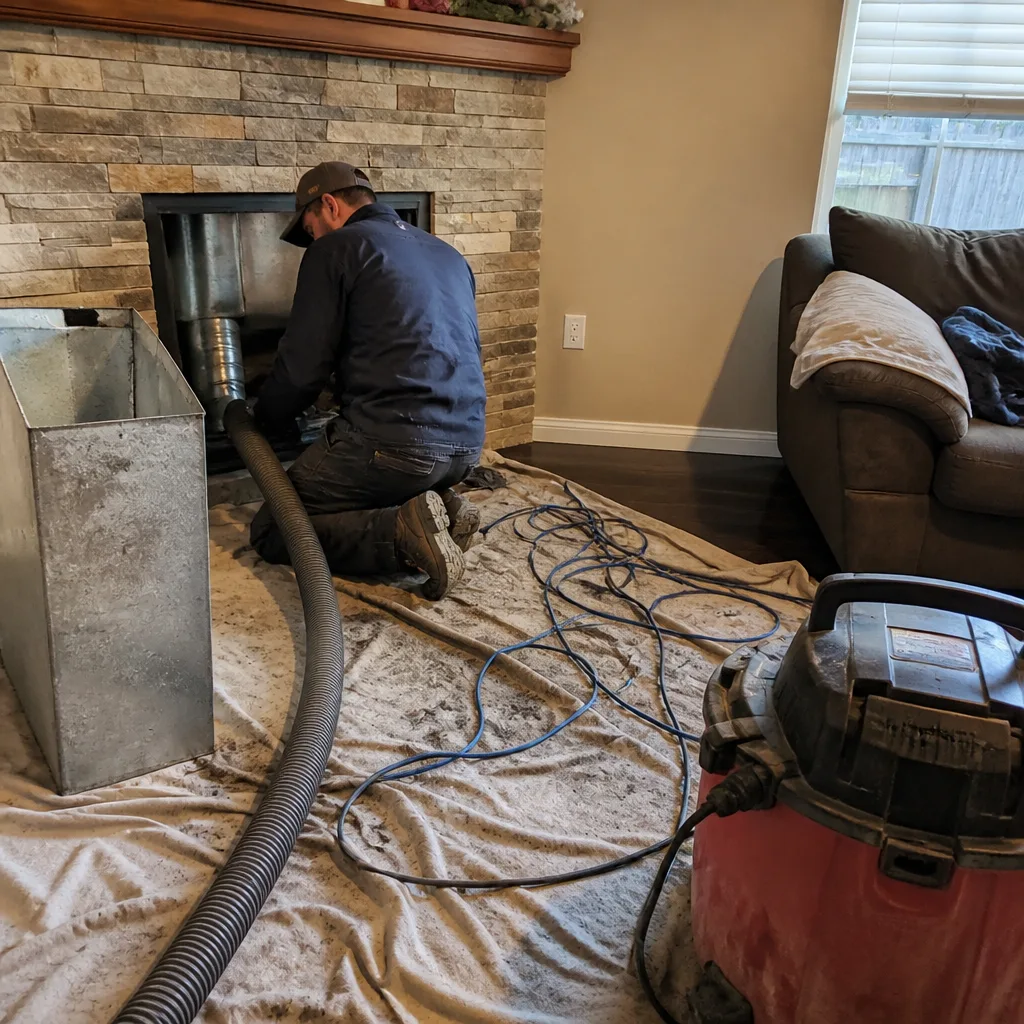
One flat price per system is agreed before any work starts, based on the written estimate. You’ll also get before-and-after photos of your own ducts. That’s the standard we hold ourselves to on every job, because you shouldn’t have to take a technician’s word for what was in there.
Common Mistakes to Avoid
- Assuming dust on a register means the ducts are dirty. Two of the most common causes are a leak at a fitting and a return-side filtration problem. Cleaning a leaky duct returns the dust in weeks.
- Cleaning before diagnosing airflow. A collapsed flex section will still be collapsed after cleaning, and the room will still be cold. Test at the registers first.
- Ignoring the coil when you smell odor. Duct cleaning won’t clear a musty smell whose source is the coil or drain pan. Address the moisture, then clean the pathway.
- Buying a filter that doesn’t seat. A high filtration rating with a gap at the edge is worse than a well-fitting mid-grade filter. Bypass undermines the whole point.
- Treating dryer vent cleaning as optional. It’s one of the leading household fire hazards, and the lint isn’t on a maintenance schedule you can skip in Erie’s longer heating season when the dryer runs more.
- Hiring on price alone. A very low quote often means a consumer-grade vacuum and a short visit. You want equipment with real pressure and a process you can see in the photos.
- Cleaning a home under construction too early. If drywall dust is still flying, the ducts will fill again. Wait until the air is clear, then clean.
See the difference
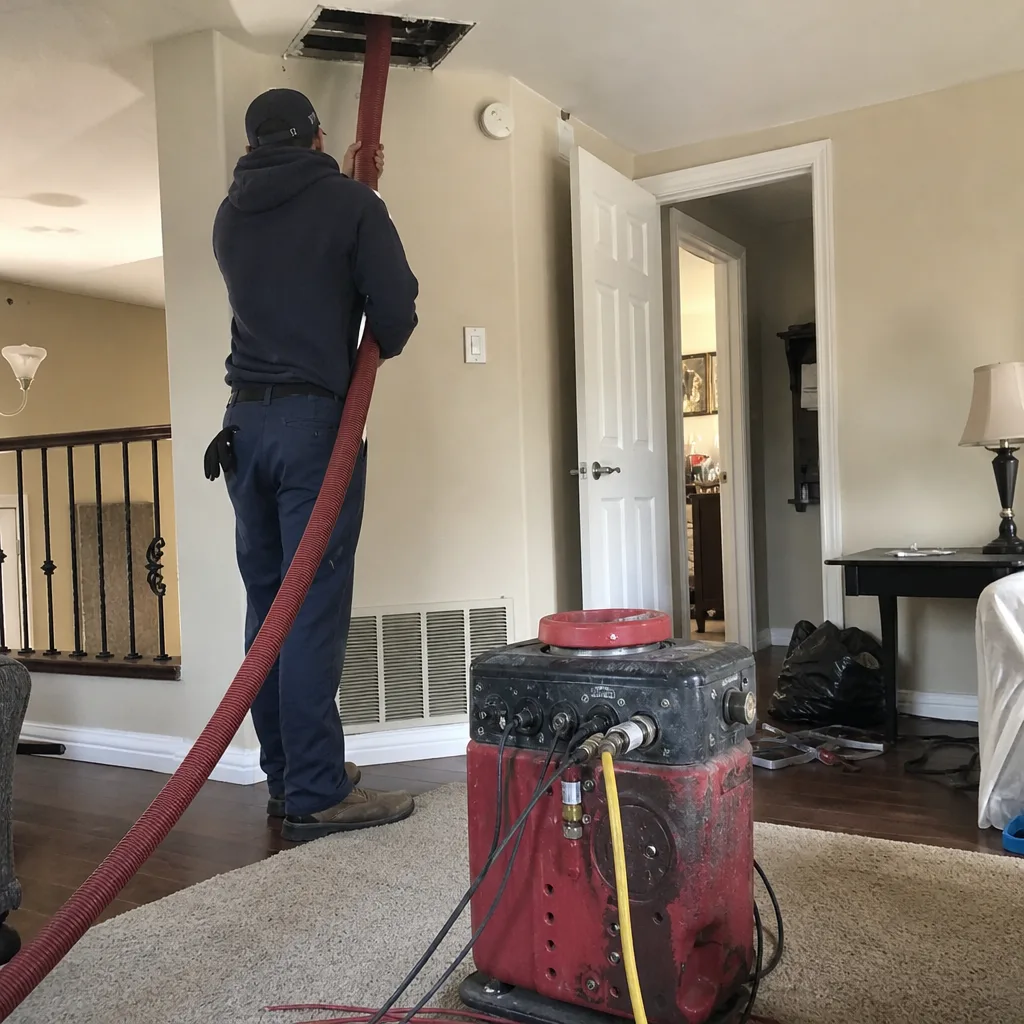 Before
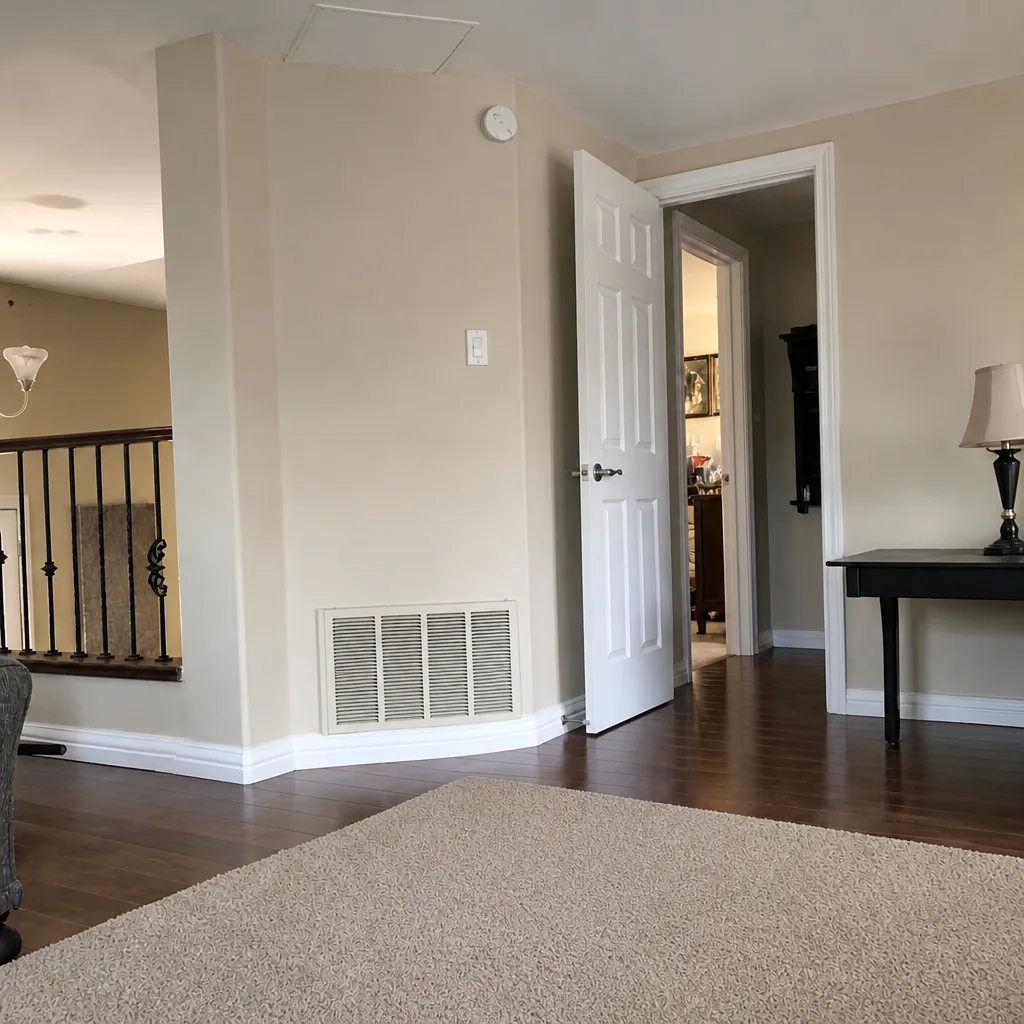 After
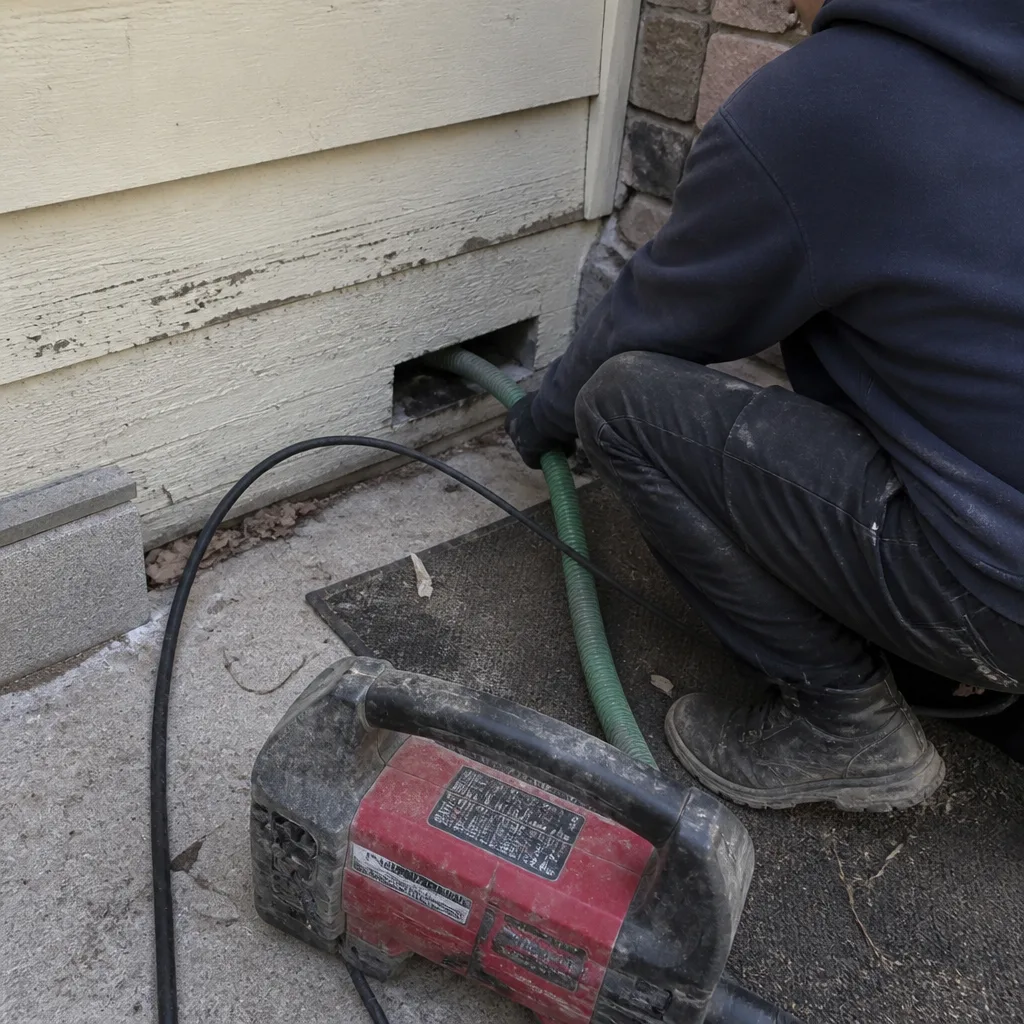 Before
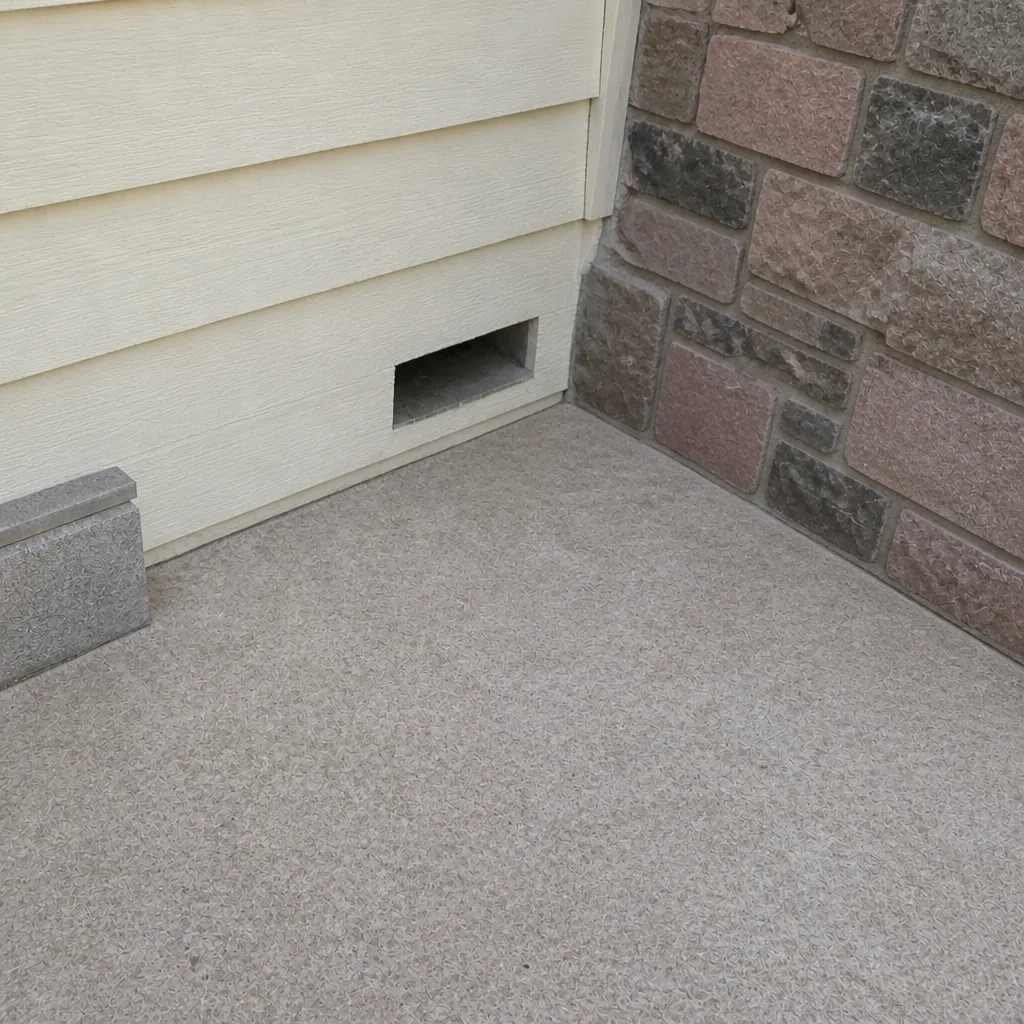 After
 Before
 After
When to Call a Professional
Call us when a symptom persists after you’ve checked the obvious: the filter fits and is clean, the registers are open, and the doors to the affected rooms are open or undercut. Call us if you see debris blowing out of a supply, if you smell something musty near the air handler or from the vents, if one room consistently loses airflow compared to its neighbors, or if your dryer needs two cycles to dry a load. Call us if you’ve recently finished a renovation and want the construction dust cleared properly.
Erie Air Duct Cleaning Pros offers free estimates in Erie. Call (877) 676-7132 for a free estimate. We use the same equipment trusted in commercial and industrial settings, Rotobrush and Nikro systems that go beyond surface cleaning. If we find a leak or damage while we’re in there, we can seal and repair it on the spot.
Frequently Asked Questions
Prices are set per job by the written estimate, because system size and condition vary. The estimate is free, and you’ll get one flat price per system before work starts, with no per-vent pricing added on. That protects you from the pattern where a low initial number becomes a much larger invoice on site. Call (877) 676-7132 for an exact quote. Estimates are free.
Not necessarily, and that’s the central point of this guide. Dust on a few registers usually points to a local cause like a leak at a fitting, a dirty return grille, or a filter that doesn’t seat properly. Check those first. If the symptom is on one branch while the rest of the system is fine, cleaning won’t solve it.
It means the source likely isn’t the airstream itself. Odor present with the fan off often comes from dampness in a crawlspace where the ducts run, or from a wet coil or drain pan in a closet or basement. Cleaning addresses the coil and plenum pathway, but the moisture source has to be resolved for the smell to stay gone.
Yes. Duct repair and sealing are part of what we do, so a leak or disconnected branch found during an inspection can be sealed and repaired on the spot. You won’t need to schedule a second contractor. We’ll show you what we found and photograph it.
There’s no fixed interval that applies to every home. A system that has a properly fitting filter, no leaks, and no recent renovation can go a long time between cleanings. Homes with pets, recent construction, or visible debris at the supplies benefit from cleaning sooner. The right question is whether the system has a condition that needs addressing, not whether a calendar year has passed.
A low quote often means consumer-grade vacuum equipment and a surface-level pass, or a teaser number that grows once the technician is on site. We use Rotobrush and Nikro systems, and we agree one flat price per system before starting. Ask any company about their equipment and their pricing structure. Call (877) 676-7132 for an exact quote. Estimates are free.
Before-and-after photos of your own ducts are the answer, and that’s what we provide. Combined with containment setup and visible equipment on site, you can see what was removed rather than taking an invoice at face value. If a company won’t show you the condition of your system before and after, that’s worth asking about.
Yes, and it’s a core service rather than an upsell. Restricted dryer vents are a leading household fire hazard, and a dryer that needs two cycles is the typical warning sign. Erie’s longer heating season means the dryer runs more months out of the year, which matters for lint buildup.
The Bottom Line
The sign you notice and the cause that needs fixing are usually two different things. Dust on a register can be a leak, a musty smell usually comes from the coil or drain pan, uneven rooms trace to collapsed or disconnected branches, and debris being pulled into vents points to filtration and sealing rather than dirt. Diagnose before you clean. That’s the whole point of this guide, and it’s the approach we take on every Erie job. If you’re seeing a persistent symptom and want a straight answer that includes before-and-after photos, we’ll come look.
Call (877) 676-7132 for a free estimate. We answer 24/7. Fast dispatch from 7am to 7pm, Sunday through Friday.
Written by the team at Erie Air Duct Cleaning Pros.