
Last updated November 25, 2026
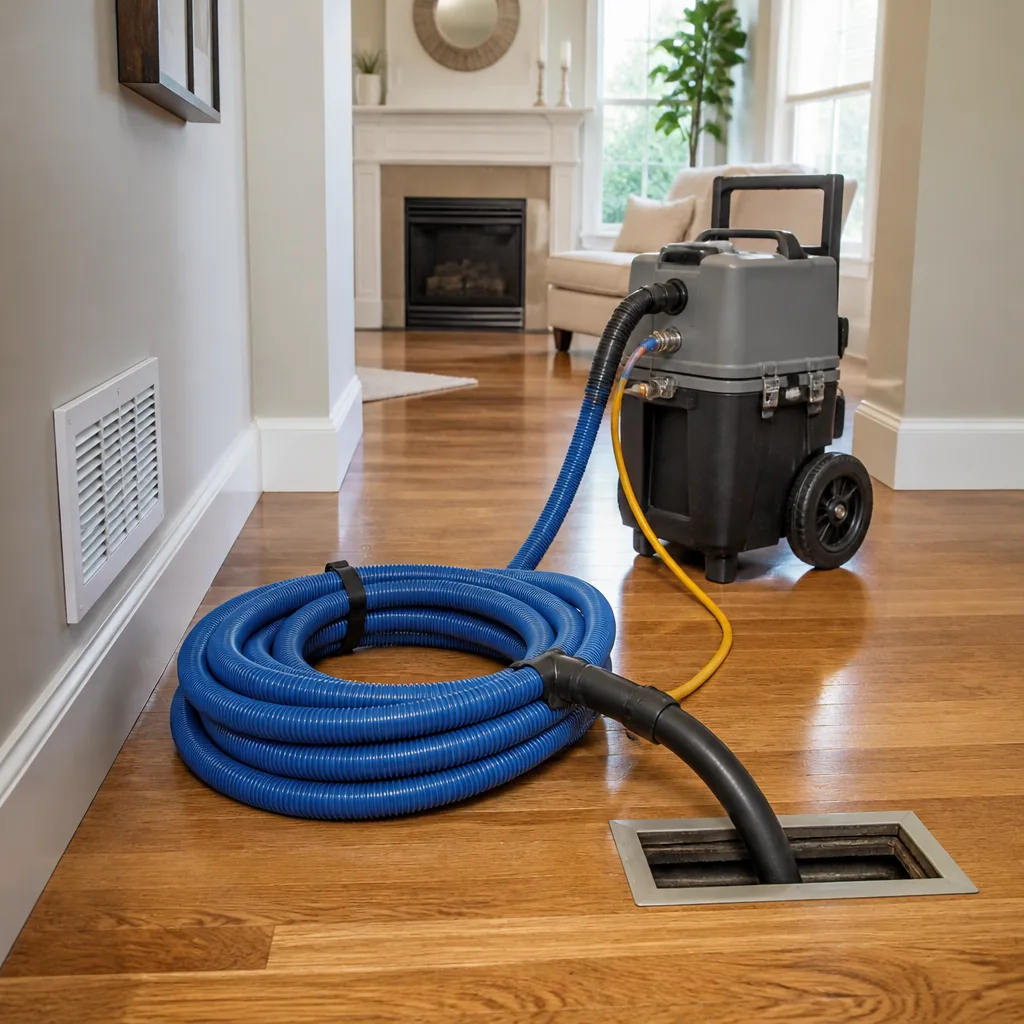 Whole-home duct cleaning
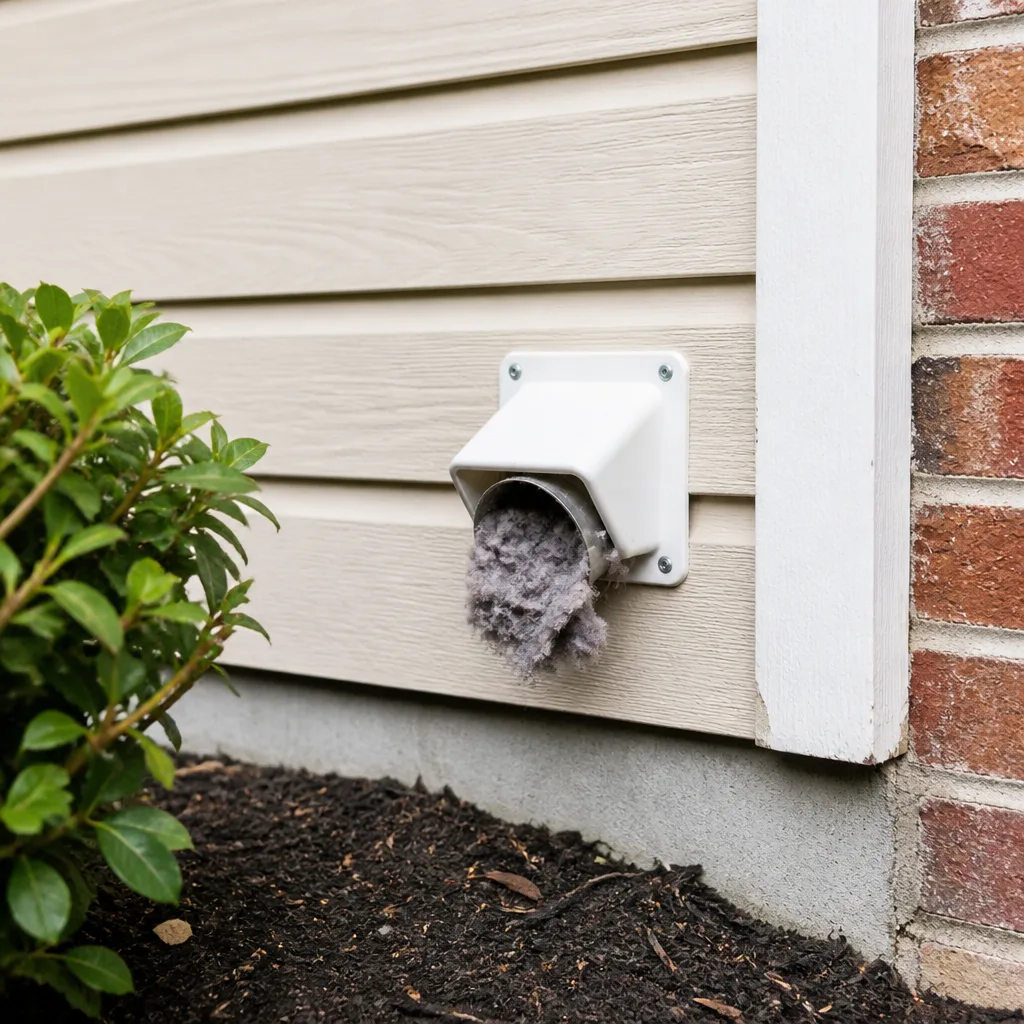 Dryer vent cleaning
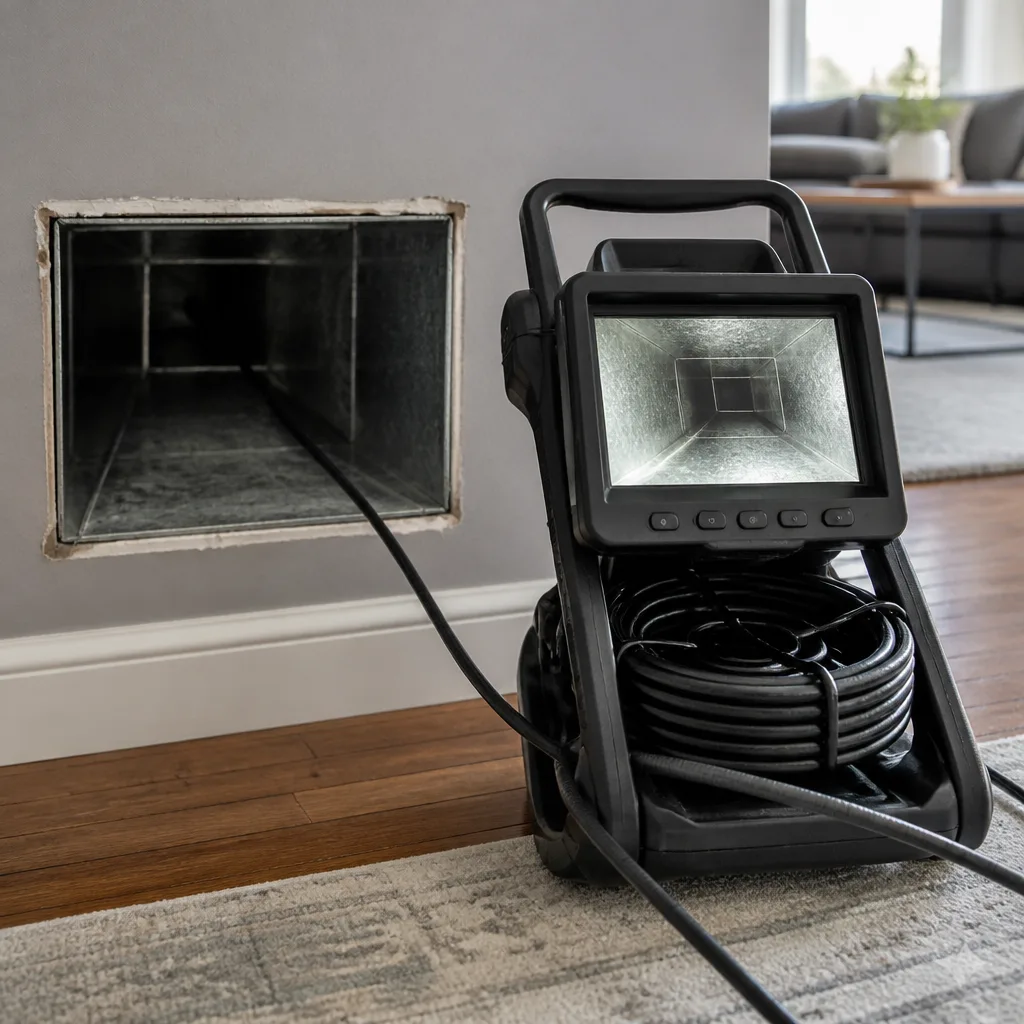 Camera inspection
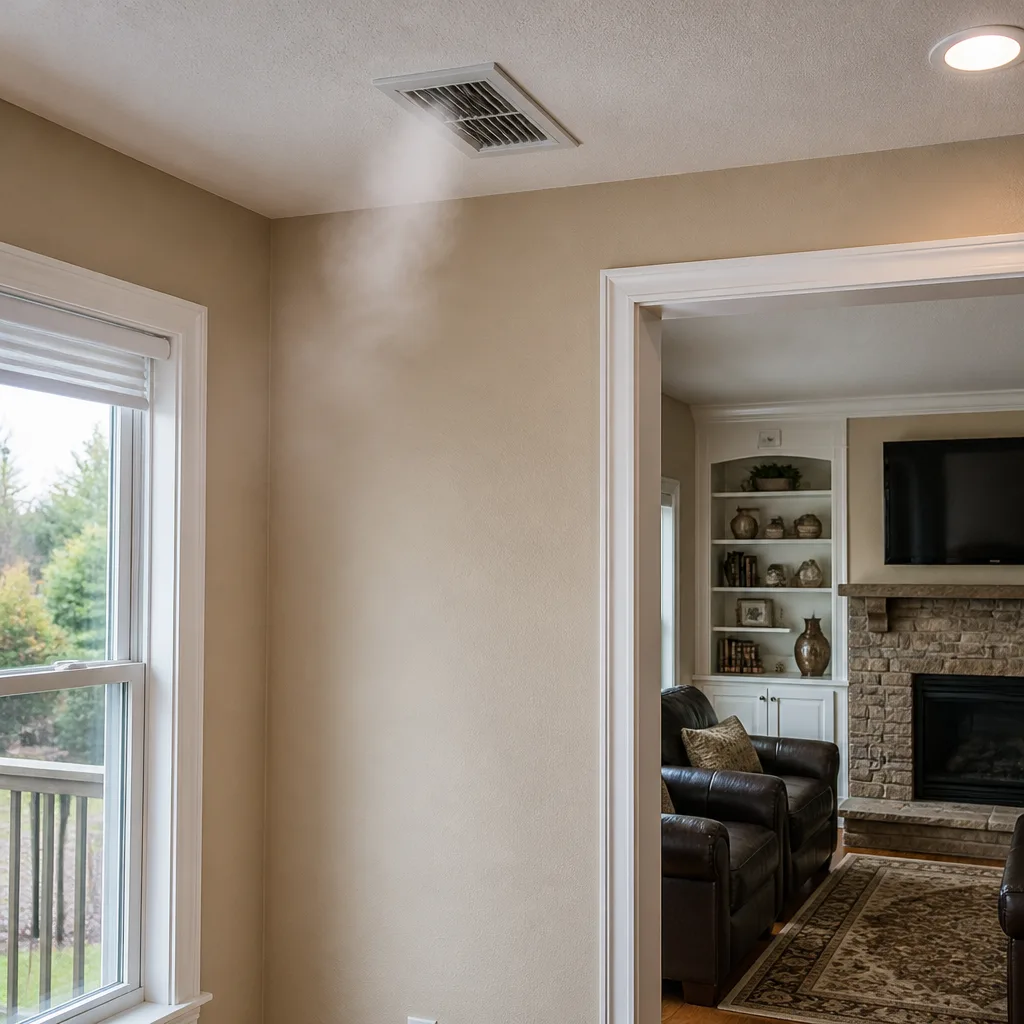 Sanitizing & deodorizing
Whole-system duct and dryer vent check with before-and-after photos - you see exactly what came out of your vents
That "$99 whole-house special" is a bait ad - the real number appears once they are in your hallway, or the "clean" is a shop-vac at the register. We photograph the inside of your ducts before and after instead.
Air Duct Cleaning Maintenance Checklist for Erie Homeowners
A filter swap every 90 days is not a duct maintenance program. It’s the minimum. For Erie homeowners dealing with high-altitude dust load and seasonal smoke, the gap between “changed my filter” and “maintained my duct system” can cost thousands in HVAC repairs. The dust here behaves differently than it does at sea level: thinner air, wind that pushes fine grit through every crack, and wildfire smoke that rides in on summer afternoons and settles into whatever the return ducts pull. This guide maps a real maintenance program to Erie’s four distinct seasons, the checkpoints a technician actually verifies, and the triggers that should override your calendar entirely.
Quick Answer
A workable air duct maintenance checklist for an Erie home includes: quarterly filter changes with MERV ratings adjusted for smoke season and allergy season, a visual register and return-grille inspection every few months, and professional full-system cleaning every three to five years (sooner after renovation, wildfire smoke exposure, or a new pet). Add dryer vent cleaning once a year, and treat any HVAC replacement or duct repair as a fresh start for the schedule.
Styles & brands we work with
- Whole-home duct cleaning
- Dryer vent cleaning
- Camera inspection
- Sanitizing & deodorizing
Table of Contents
- Why Erie’s Climate Changes the Maintenance Math
- The Four-Season Checkpoint Map
- What MERV Ratings Actually Do at Erie’s Elevation
- How to Inspect Registers, Flex Duct, and Returns Yourself
- Service Interval Triggers That Override the Calendar
- What a Professional Visit Should Include
- The Maintenance Log Template Worth Keeping
- Dryer Vent Cleaning as Core Maintenance
Why Erie’s Climate Changes the Maintenance Math
Erie sits at elevation on the eastern edge of the Front Range, and that geography drives most of what makes duct maintenance here different from what generic checklists assume. The wind is the biggest factor. Erie catches strong, steady gusts off the foothills, and that wind carries fine mineral dust from exposed soil, gravel, and construction sites. That dust is finer than what you’d find in lower, wetter climates, which means standard residential filters catch less of it and larger amounts pass through to settle inside duct runs, on blower wheels, and on evaporator coils.
The second factor is smoke. When wildfire smoke drifts into the Front Range during summer, it doesn’t just sit in the outdoor air. It gets pulled into your return ducts, and depending on your filter, some fraction of it ends up coating duct interiors with fine particulate that a vacuum register can’t reach. That’s why Erie duct schedules can’t follow a simple spring-and-fall pattern. The smoke exposure matters most in July and August, which is when most generic checklists tell you nothing needs attention.
The third factor is the heating and cooling cycle itself. Erie homes swing between heavy heating load in winter and heavy cooling load in summer, and the duct system runs hard in both directions. That expansion and contraction cycles the flex duct connections and sealed joints more than in mild climates. Small leaks that open up around a boot or collar let attic dust into the airstream, and once that starts it feeds itself.
The last piece is the housing stock. Erie has a mix of older homes with rigid metal duct and newer builds with flex duct runs, and each has different failure modes. Older metal duct develops loose seams and disconnected joints; newer flex duct develops kinks and torn outer jackets. A maintenance program that treats them identically will miss what actually matters in each.
The Four-Season Checkpoint Map
Erie’s four seasons each stress the duct system in a different way. Instead of a generic “spring cleaning, fall tune-up” pattern, use these four checkpoints mapped to how the air actually behaves here.
Late Winter to Early Spring: Thaw and Dust
As the freeze lifts, the ground dries out and Erie’s wind starts lifting fine particulates again. This is the highest dust-load window of the year.
- Replace the furnace filter at the start of the thaw, not on a fixed 90-day timer.
- Check the furnace blower compartment for visible dust buildup at the base of the wheel.
- Look at each return grille for grey dust trails, which signal a loose connection upstream.
- Verify your humidifier (if you have one) isn’t pushing mineral dust into the supply airstream.
- Schedule a professional inspection if you see dust accumulating in the same spots twice.
Late Spring to Early Summer: Pollen and Cooling Startup
Pollen rides the same wind as the dust, and it becomes food for the evaporator coil once the AC starts running. Cooling season begins the moment the first warm week hits.
- Change the filter the week the AC comes on for the season.
- Check that supply registers feel consistent airflow room to room (weak spots often signal a leaky branch).
- Listen for whistling at return grilles – it’s a sign of a restricted filter or a duct that’s undersized for the load.
- Confirm the condensate drain isn’t overflowing into the duct chase.
Mid Summer to Early Fall: Smoke Season
This is the part generic checklists miss entirely. Wildfire smoke on the Front Range means your return ducts can be pulling in fine particulate for weeks. If your filter is a low MERV rating, the smoke gets past it.
- Upgrade to a higher-MERV filter during smoke weeks, but only within what your blower is rated for.
- Seal windows and doors on heavy smoke days to reduce the load on the return system.
- Watch for a musty smell after a smoke event, which often signals particulate has settled into the duct interior and picked up moisture.
- Schedule duct cleaning if two or more smoke events have hit during the season.
Fall to Early Winter: Heating Startup
When the furnace fires up for the first cold week, the system has to push heated air through ducts that have cooled and contracted for months. Any small leak is going to show up now.
- Change the filter the day the furnace comes on for the season.
- Smell the air from supply registers on the first heating cycle – a dusty or metallic smell is normal for a few minutes, but persistent smell signals settling debris.
- Check for temperature differences between rooms (a leaky duct in an attic run will drop supply temperature before it reaches the far room).
- Inspect the visible duct connection at the furnace plenum for loose tape or separated joints.
- If the system short-cycles or won’t hold temperature, call for a professional check before the cold deepens.
What MERV Ratings Actually Do at Erie’s Elevation
Filter MERV ratings are often described in terms of particle size, but what actually matters in Erie is how the rating interacts with system pressure. Higher MERV ratings catch finer particles – good for smoke and fine mineral dust – but they also create more resistance to airflow. At Erie’s elevation, thinner air means the blower is already working harder to move the same volume, and a high-MERV filter can push it past what it can handle.
The ratings to think about:
- MERV 8: The standard residential baseline. Catches larger dust and pollen but not the fine smoke particulate or fine mineral grit that makes up a big share of Erie’s dust load.
- MERV 11: A reasonable year-round choice for most Erie homes. Catches finer dust and a good share of smoke particulate without overloading a standard blower.
- MERV 13: Appropriate during heavy smoke events or if someone in the house has respiratory concerns, but only if your HVAC system is rated for it. Many older Erie furnaces are not.
- MERV 16 and above: Usually a mistake in a standard residential setup without a specific blower designed for the pressure drop. You’ll lose airflow, and the unit will short-cycle.
The practical rule for Erie: run MERV 11 as your baseline, watch the weather forecasts for smoke events, and step up to MERV 13 only if the system is rated for it and only for the duration of the event. Then drop back down. Running MERV 13 all year on a system that can’t handle the pressure is a common mistake that causes more problems than it solves.
Also, elevation reduces air density, which means filter surface area matters more here than at lower altitudes. A pleated filter with more surface area performs better than a flat one of the same MERV rating. And buying a filter with a lower rating than your system can accommodate is a false economy – you’re just passing the dust downstream.
If you’re not sure what MERV rating your system can handle, that’s a question for a professional visit, not a guess at the hardware store. Ask them to verify at the same time they check the blower.
How to Inspect Registers, Flex Duct, and Returns Yourself
You don’t have to open the system to do useful inspection. Between professional visits, a homeowner can catch most developing problems with a flashlight and a few minutes per room. Here are the checkpoints to hit.
Supply Registers
- Remove the register grille by hand (most are friction-fit or have one or two screws).
- Shine a flashlight into the boot – the metal box the register attaches to – and look for dust buildup on the sides that’s more than a thin uniform coat.
- Check the joint where the boot meets the duct for separated tape, gaps, or torn insulation.
- Feel for air escaping around the register frame when the system is running (a hand near the edges will tell you quickly).
- Look for grey or black streaking on the ceiling around the register, which signals a leak pulling attic or wall-cavity air.
- Reinstall the register and verify all the supply grilles in that room give similar airflow when you stand under them.
Flex Duct
Flex duct is common in newer Erie builds and in any attic run. It’s vulnerable in specific ways – the outer jacket tears, the inner liner collapses if it’s bent too sharply, and the connections at boot and plenum come loose. Look for:
- Torn or sagging outer jacket (the silver foil outer layer)
- Kinks sharper than a gentle curve – each one reduces airflow significantly
- Duct runs resting directly on attic floor joists, which wear through over time
- Tape that’s peeling or that has gone brittle at the connection points
- Any duct run that’s visibly separated from its collar or boot
Return Grilles
The return grille is where you can learn the most about the health of the whole system, because it’s the front door for whatever’s coming back into the HVAC unit.
- Look at the face of the grille – a uniform thin dust layer is normal, but heavy collection on one side signals an imbalanced return.
- Remove the grille and shine a light into the return chase. You’ll see the duct interior; look for dust accumulation deeper than a light film, and any sign of pest activity or moisture staining.
- Check the filter (if the return has one) even if you haven’t hit the calendar date – Erie dust loads can clog a filter faster than expected in spring.
- Listen for rattle or whistle – both signal something the system is fighting against.
- Look at the framing around the grille for gap that lets wall-cavity air leak into the return.
If any of these checks turn up something that concerns you, note it and bring it up at your next professional visit. Catching a torn flex duct or a loose boot collar early is much cheaper than fixing the downstream damage.
Service Interval Triggers That Override the Calendar
Calendar-based maintenance is a starting point, not the whole schedule. Erie’s conditions produce specific events that should override whatever interval you’ve set. Here are the triggers we tell homeowners to watch for – any one of them means move the professional cleaning to now, not next quarter.
- After a major renovation: Drywall dust, sawdust, and construction debris end up in the ducts regardless of plastic sheeting. One professional cleaning after the project closes out is standard, and skipping it means the new HVAC system starts its life pulling in construction residue.
- After a significant wildfire smoke event: If Erie sits under smoke for more than a few days during fire season, the return ducts have been pulling fine particulate the whole time. Cleaning after the event removes what’s settled and prevents it from becoming a recurring source.
- New pet (or a shedding season that surprises you): Pet hair and dander accumulate quickly in the return airstream. If you’re seeing fur on return grilles and you recently added a pet, the schedule should compress.
- HVAC replacement: A new furnace or AC needs clean ducts to run at rated efficiency. Never install a new system on a duct network that hasn’t been cleaned in years – the new unit’s blower and coil will load up immediately.
- Duct repair or sealing work: Any time a duct connection has been opened, resealed, or replaced, the whole system should be evaluated to confirm no debris from the work ended up downstream.
- New musty smell: A persistent musty smell after cleaning or after a humid period suggests moisture in the system – often from the cooling coil, sometimes from a leak in the duct jacket. Address it before the next heating season.
- Visible dust accumulation for no obvious reason: If you’re dusting more frequently than you used to, or if surfaces near supply registers are collecting dust faster than usual, the source is usually what’s coming out of the ducts.
- Move-in to a new home: You don’t know the last cleaning date, and the prior owner’s evidence may not be trustworthy. Clean, then start your own log.
Any one of these triggers is enough to schedule a professional visit. Don’t stack them and wait – the cost of cleaning is much smaller than the cost of a compressor replacement or a coil rebuild from dust loading.
What a Professional Visit Should Include
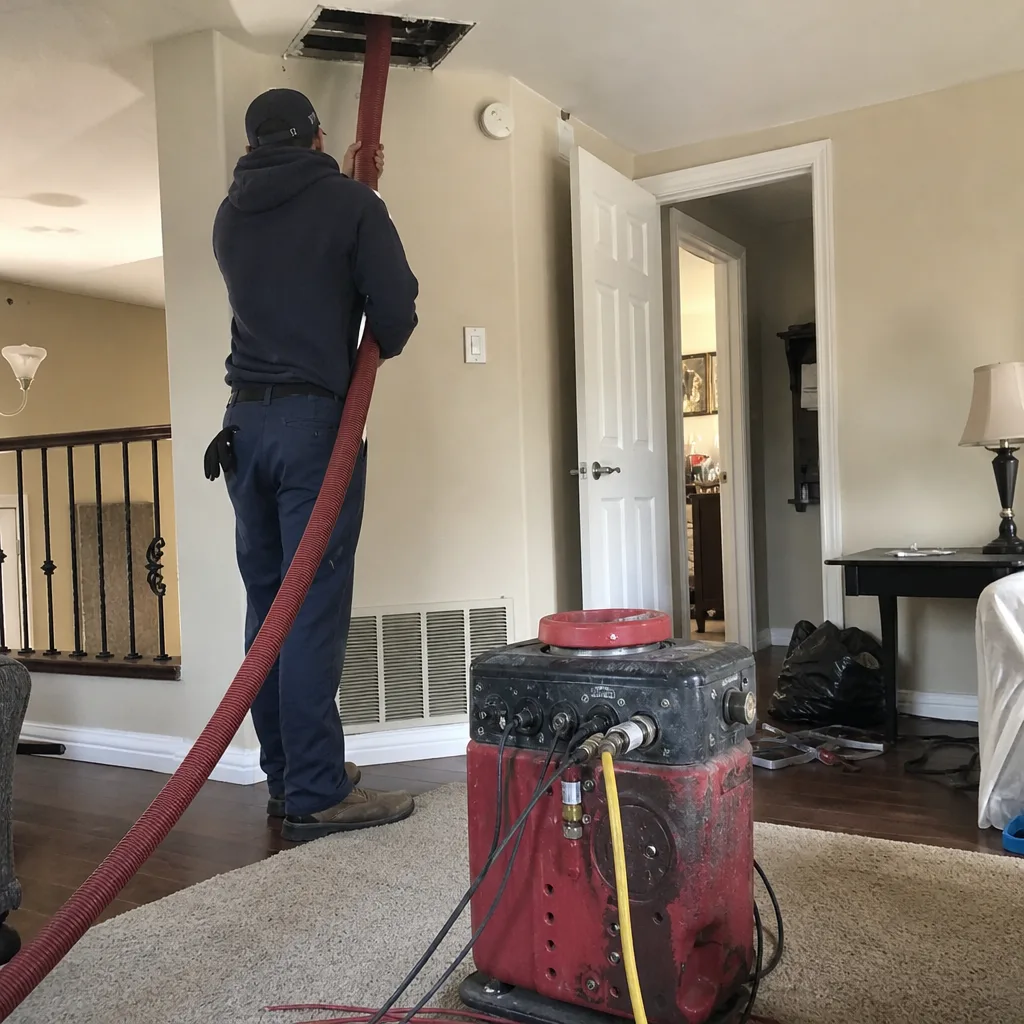
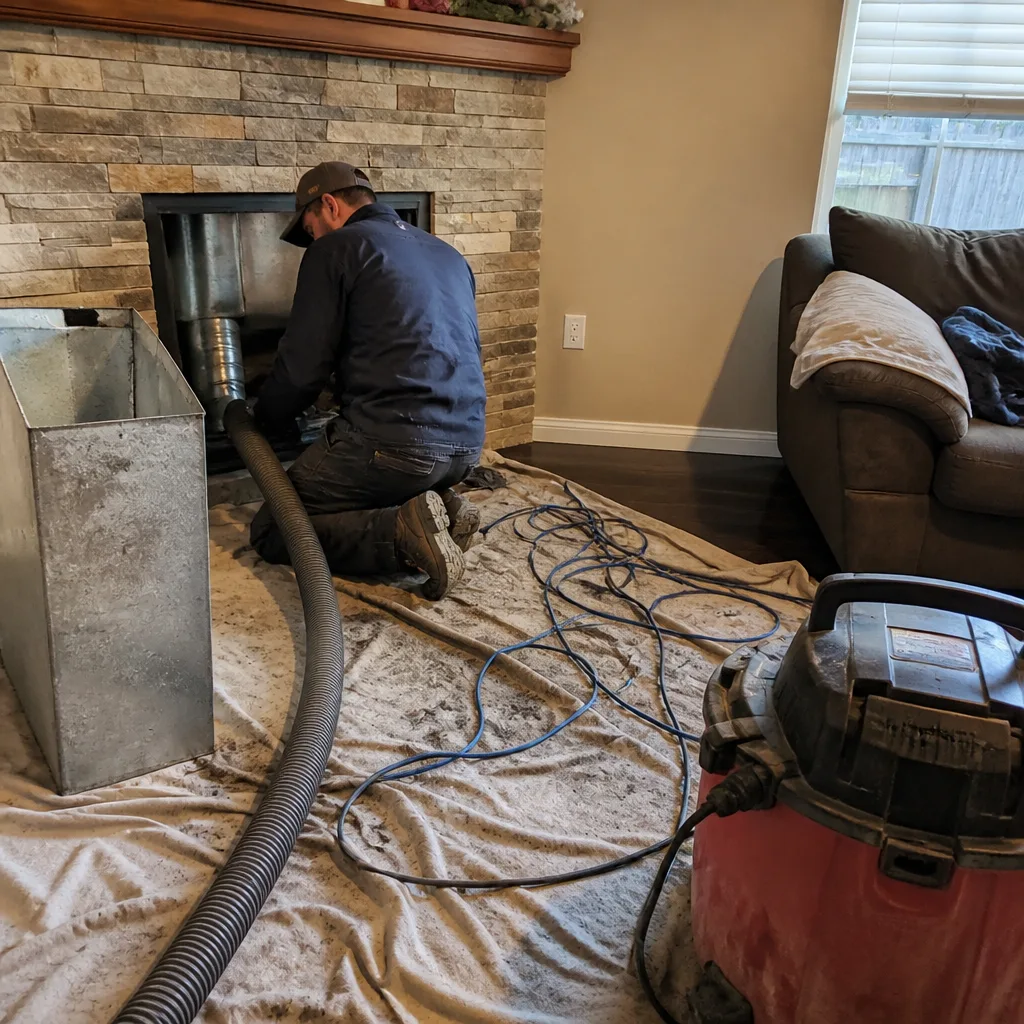
A proper professional cleaning is not a technician with a shop vac poking at the nearest register. A full-system visit uses industrial-grade equipment and follows a specific sequence. When you book a service in Erie, here’s what a well-run visit should look like.
- System evaluation: A technician walks the system first, notes the duct layout, checks filter condition, and looks for visible damage that cleaning would make worse (or that needs to be fixed before cleaning).
- Containment setup: The work area should be contained so loosened debris doesn’t recirculate into the living space. Abatement Technologies containment systems are what a serious operator uses here – especially in homes with allergy or asthma concerns.
- Negative-pressure cleaning: A high-powered vacuum system pulls the duct interior under negative pressure so debris is captured at the source rather than blown through the house. This is where equipment matters enormously – Rotobrush and Nikro industrial systems do the job that consumer vacuums can’t.
- Agitation of duct interior: Whipping and brushing the duct surface physically loosens debris that vacuum alone would miss, then vacuum captures it. This step is the difference between a surface clean and a full clean.
- Supply and return register cleaning: Each register is removed, cleaned, and reinstalled.
- Component cleaning: The blower wheel, evaporator coil, and furnace plenum – the parts of your HVAC system the air passes through – are cleaned if the service includes HVAC cleaning.
- Verification and photography: Before-and-after photos of the duct interior, so you can see what was removed rather than take it on faith.
- Findings report: Any leaks, damaged flex duct, disconnected collars, or mold discovered during the cleaning should be documented, along with a repair quote.
If a professional visit doesn’t include a repair path for problems they find, you’re going to be calling a second contractor. That’s part of why we handle duct repair and sealing alongside cleaning – if a leak or torn duct shows up, we can seal and repair it on the visit rather than leaving you with a documented problem and no way to resolve it.
The equipment really is the difference. Consumer-grade vacuums common in the residential market will not pull the settled debris off a blower wheel or lift fine mineral dust out of a long return run. Rotobrush and Nikro systems are the ones commercial and industrial sites use for exactly this reason. Ask any service provider you’re considering what equipment they use, and if the answer is vague, that’s your answer.
The Maintenance Log Template Worth Keeping
Most homeowners don’t keep a duct maintenance log until the day they try to sell the house and realize their records are a pile of receipts. A log that starts now will save you real money at resale, and it makes your own maintenance decisions easier because you can see the actual history rather than guess at it.
The log should track:
- Date of each professional visit (cleaning, inspection, or repair)
- Service performed (full cleaning, HVAC component cleaning, dryer vent cleaning, duct repair, sanitizing treatment)
- Equipment used (name the systems – Rotobrush, Nikro, Abatement Technologies containment)
- Findings and repairs (any leaks found and sealed, joints repaired, components replaced)
- Before-and-after photos (save the files; they’re your evidence at resale)
- Filter changes (date and MERV rating, plus any bump during smoke season)
- Trigger events (renovation completion date, major smoke event, new pet, HVAC replacement)
A simple spreadsheet works fine. So does a physical folder with printouts. What matters is that the log is chronological and specific. When a buyer’s inspector notes the ducts look recent, you can hand them a page that says exactly when they were cleaned, by whom, with what equipment, and what was found. That’s a real resale asset – and it makes you an obviously careful owner.
The log also earns its keep day to day. If you’re trying to figure out whether it’s been three years or five, the log knows. If you’re trying to remember what MERV rating worked during the last smoke season, the log knows. Keeping it takes five minutes per visit and prevents most of the maintenance mistakes below.
For any professional visit, we can walk you through exactly what was done and provide the documentation. That’s what “showing the work” means – not a glossy one-liner on the invoice, but a real record of what was found, what was fixed, and what to watch.
Dryer Vent Cleaning as Core Maintenance
Dryer vent cleaning belongs in the same maintenance program as duct cleaning, not in a separate “extras” column. Lint buildup in a dryer vent is one of the leading household fire hazards in the country, and a dryer that takes two cycles to dry a load is a dryer that’s signaling a ventilation problem. In Erie, the dry climate means the lint dries out faster and catches fire more readily, which makes annual cleaning more important than in humid climates where lint stays damp longer.
Signs your dryer vent needs attention now:
- The dryer takes noticeably longer to dry a load than it used to
- The dryer exterior (door, top) is hot to the touch when running
- There’s a burning smell when the dryer runs
- Lint is visible around the outside vent flap or on the ground near it
- You can’t remember the last time it was cleaned
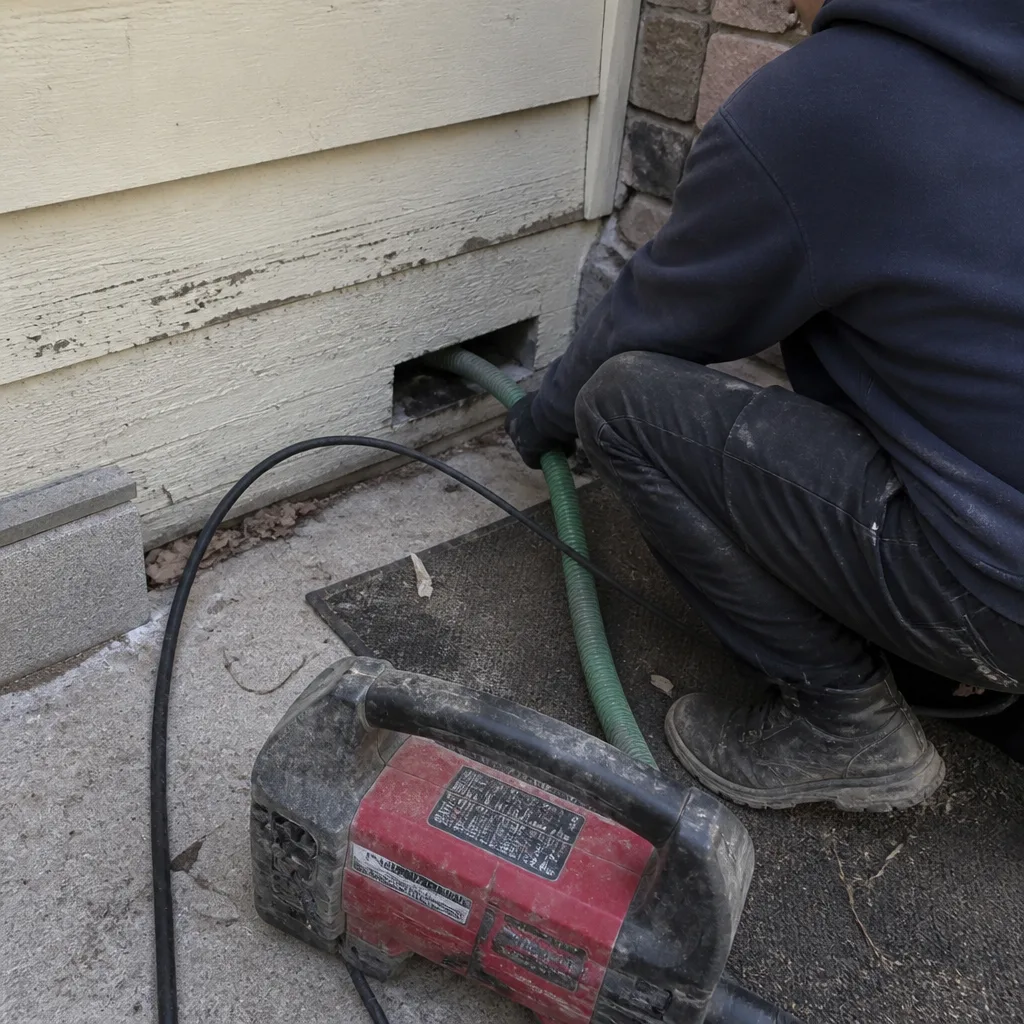
Most Erie homes need dryer vent cleaning once a year. Homes with heavy laundry loads, large households, or long vent runs may need it more often. The cleaning itself is straightforward when done right: the technician disconnects the vent, brushes and vacuums the full run including the transition duct, verifies airflow at the exterior flap, and confirms the run isn’t crushed or blocked by a bird nest or other obstruction at the outside terminus. Crushed flex transition duct behind the dryer is the most common failure we see – a short rigid transition duct is usually the better installation and the safer one.
Treating this as core maintenance is why we list it as one of the five services we handle, not an upsell. The prevention is worth more than the alert. If you can’t remember the last time your dryer vent was cleaned, book it before the next laundry cycle is a reminder.
Common Mistakes to Avoid
- Treating the filter as the whole program. A filter catches a fraction of the dust that enters the return system. Duct interior, blower wheel, and coil all load up regardless of filter changes.
- Running MERV 13 year-round without checking blower capacity. Erie’s thinner air makes high-MERV filters harder on the system than at sea level. Step up during smoke events, then step back down.
- Waiting for a musty smell before scheduling cleaning. By the time you smell something, the source is usually well established. Trigger on events (renovation, smoke, pet), not on smell.
- Installing a new HVAC system on a dirty duct network. The new unit’s blower and coil will load up within a season and lose efficiency right away.
- Hiring a provider who only cleans and doesn’t repair. If they find a torn flex duct or a disconnected boot, you need someone who can seal it – not a note saying “duct damage, recommend separate contractor.”
- Skipping dryer vent cleaning because the dryer “seems fine.” The signs (longer drying, hot dryer exterior, burning smell) show up late. Annual cleaning prevents the moment when they do.
- No documentation. Selling a house with a duct service history is worth real money, and a log takes five minutes per visit. No record means no credit at resale.
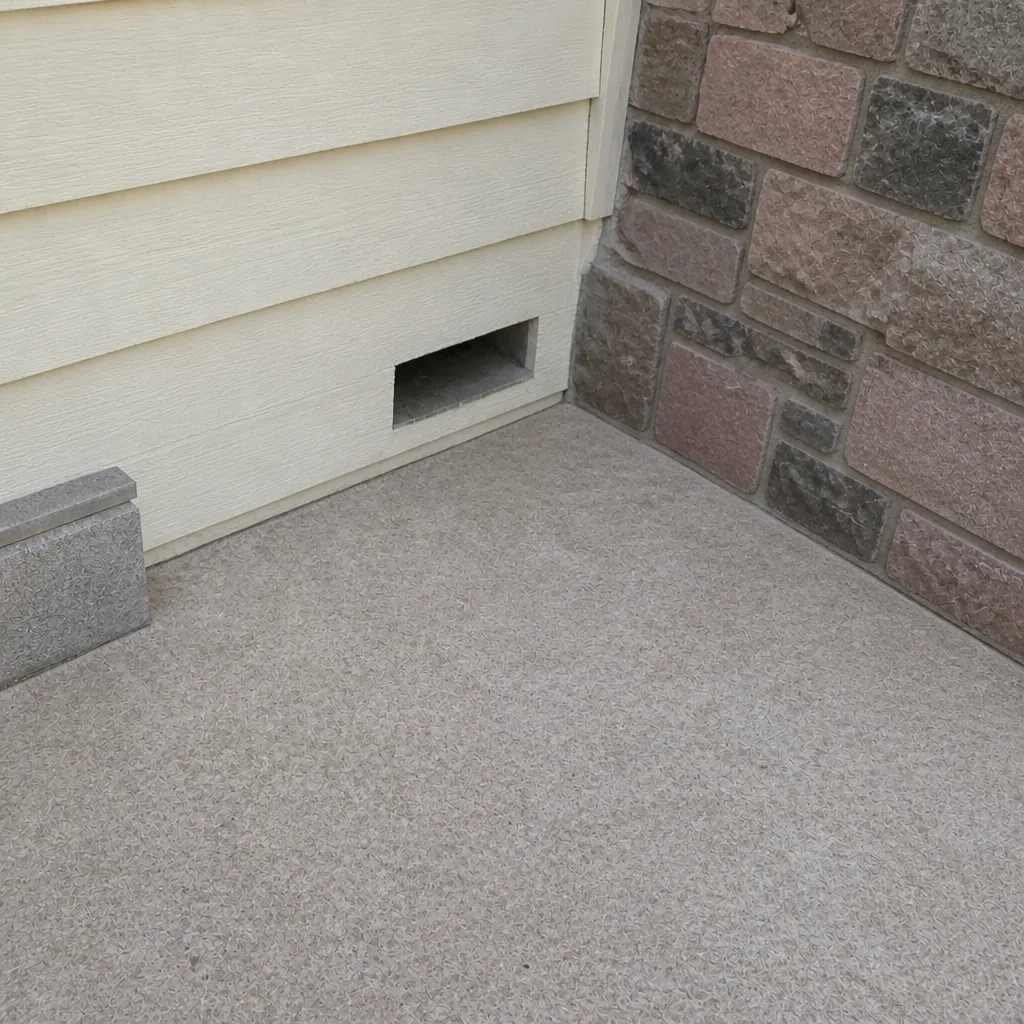
See the difference
 Before
 After
 Before
 After
 Before
 After
When to Call a Professional
Some jobs are homeowner-appropriate – filter changes, register inspection, filter rating upgrades. Others want a professional on the ground. Call for air duct cleaning if your home has never been cleaned, if it’s been more than three to five years, or if any trigger event has hit (renovation, smoke exposure, new pet, HVAC replacement). Call for service if a duct connection has visibly come apart, if a return or supply boot is leaking, or if you smell something musty you can’t track to a specific source. Call for dryer vent cleaning once a year, and sooner if the dryer is signaling. Call for inspection if a professional visit is overdue and you want eyes on the whole system.
Erie Air Duct Cleaning Pros offers free estimates in Erie. Call (877) 676-7132. We answer 24/7. Fast dispatch from 7am to 7pm, Sunday through Friday. Our technicians have up to 9 years of experience, and the local professionals we connect you with use Rotobrush and Nikro systems on every job – not consumer vacuums. If they find a leak or damage while they’re in there, they can seal and repair it on the spot.
Frequently Asked Questions
Air duct cleaning cost varies by the size and layout of the system, how many returns and supplies you have, and what other services you add (dryer vent, HVAC component cleaning, sanitizing). Expect a whole-system price agreed in writing before work starts, not a teaser coupon that grows once the technician is on-site. The one-flat-price-per-system approach is what to ask for. Call (877) 676-7132 for an exact quote – estimates are free.
Cheap quotes usually reflect either consumer-grade vacuum equipment (which can’t actually remove settled debris from the duct interior) or a scope that doesn’t include register removal, component cleaning, or containment. Rotobrush and Nikro systems cost more to operate, but they do the actual job. Ask any provider what equipment they’ll bring and what the visit includes. If the answer is vague, the cheap price is the answer. Call (877) 676-7132 to compare a written scope – estimates are free.
Every three to five years under normal conditions, but Erie’s dust and smoke load compresses that for many homes. Trigger-based scheduling beats calendar-based: clean after renovation, after a major smoke event, after a new pet, and after HVAC replacement. If you can’t remember the last time, assume it’s overdue. Call (877) 676-7132 for an honest assessment – estimates are free.
Ask for before-and-after photos of your own ducts, not stock images. A professional visit should include photography of the duct interior before cleaning and after, so you can see the difference. A findings report listing any issues discovered is also standard. If the work is verified visually and documented, you know it was actually done. Call (877) 676-7132 with questions about the process – estimates are free.
Yes. Filters catch only the fraction of dust that reaches them in the return airstream, and they don’t address dust that has already settled in the duct runs, on the blower wheel, or on the evaporator coil. A filter is the first line of defense; cleaning the system is separate. Both matter, and only one requires a technician. Call (877) 676-7132 to schedule a full-system evaluation – estimates are free.
It addresses one source of indoor particulate, and for many homeowners that’s a meaningful piece of the picture. Cleaning the system removes settled ash and fine dust that recirculates when the HVAC runs. Pair it with an appropriate filter during smoke events, and if anyone in the house has respiratory sensitivities, tell the provider at booking so they can plan containment accordingly. Call (877) 676-7132 to talk through the options – estimates are free.
HVAC cleaning specifically addresses the mechanical components air passes through – blower wheel, evaporator coil, furnace plenum – while duct cleaning addresses the duct runs themselves. A full-system service should include both. If a provider’s “duct cleaning” doesn’t touch the blower or coil, dust loading in the mechanicals will undo some of the cleaning shortly after. Call (877) 676-7132 to confirm what a full-system visit includes – estimates are free.
It should be. Dryer vent cleaning is separate from the HVAC duct system but the same category of maintenance – and it addresses a leading household fire hazard rather than a comfort issue. Annual cleaning is standard. If you’re bundling a duct visit, ask about adding dryer vent. Call (877) 676-7132 – estimates are free.
The Bottom Line
Air duct maintenance for an Erie home is not a filter-change reminder. It’s a four-season program that responds to specific local conditions: spring thaw dust, pollen and cooling startup, summer smoke events, and heating startup in the fall. Alongside that, you need visual inspections between professional visits, filter MERV ratings chosen for your system’s pressure tolerance, trigger-based professional cleaning after renovation, smoke, new pets, or HVAC replacement, annual dryer vent cleaning, and a maintenance log that travels with the home. Get those pieces right and the whole system – ducts, HVAC components, air itself – stays healthy without premature repairs. Get them wrong and you’re paying for the same problem repeatedly in the form of dust, allergies, and efficiency loss.
Have a Question About Your Erie Home’s Duct System?
We’re Erie Air Duct Cleaning Pros, and if you’re trying to figure out whether your system needs attention, the honest answer is usually “let’s look.” A professional visit costs nothing to quote, and it gives you a real assessment instead of a guess. Call (877) 676-7132. We answer 24/7. Fast dispatch from 7am to 7pm, Sunday through Friday. The local professionals we connect you with are licensed and insured as their state requires, use Rotobrush and Nikro systems on every job, and can repair what they find on the spot rather than leaving you with a list of problems.
Indoor air quality worth having isn’t just about removing dust – it’s about verifying the system that moves it. If you haven’t had a thorough look at your ducts, filters, and dryer vent in a while, now is a reasonable time to start.
Written by the team at Erie Air Duct Cleaning Pros.