
Last updated November 25, 2026
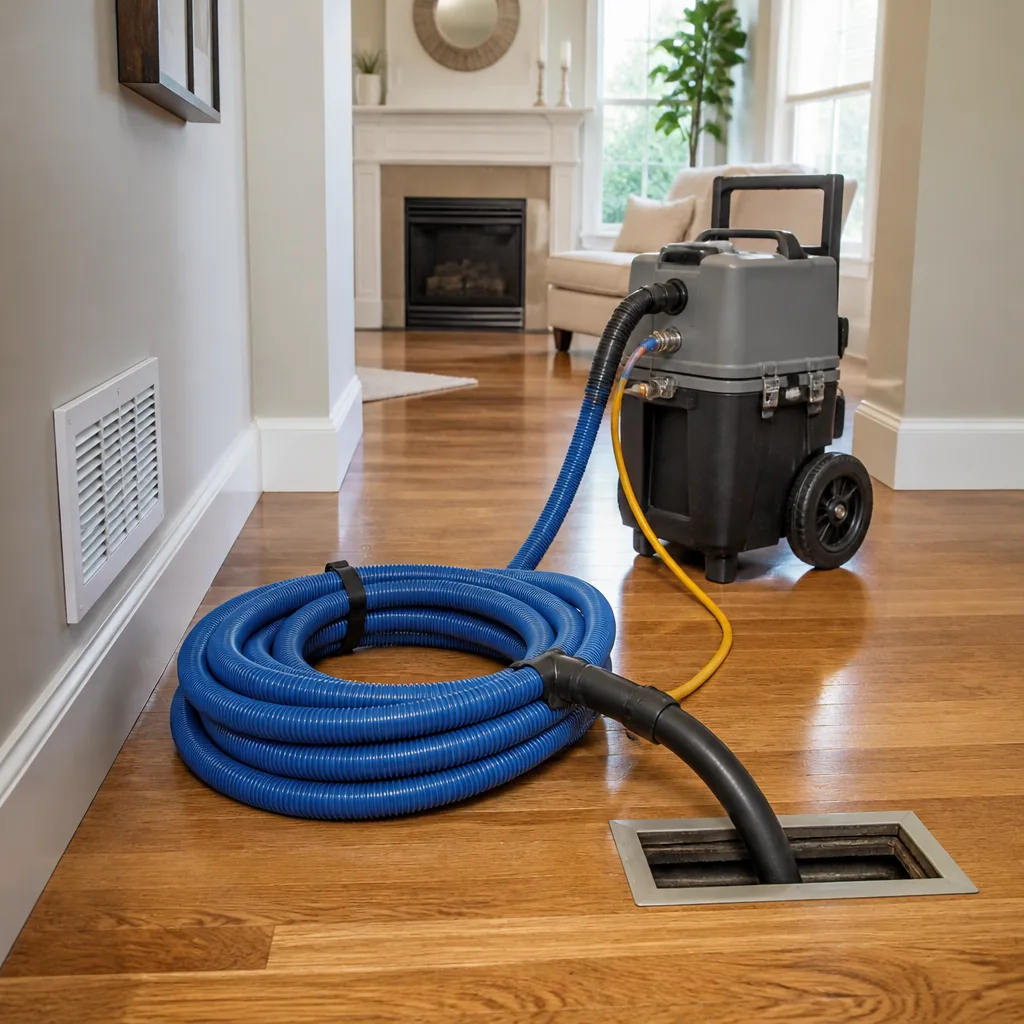 Whole-home duct cleaning
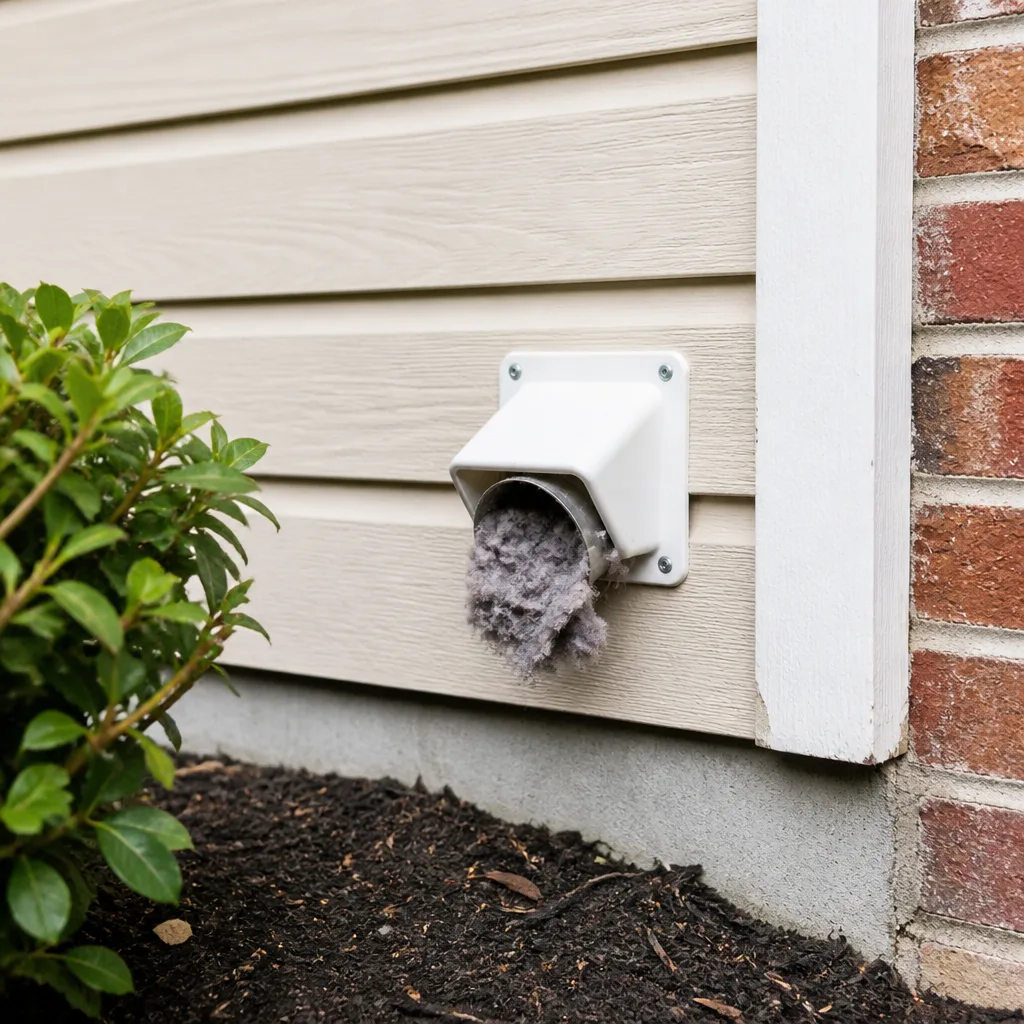 Dryer vent cleaning
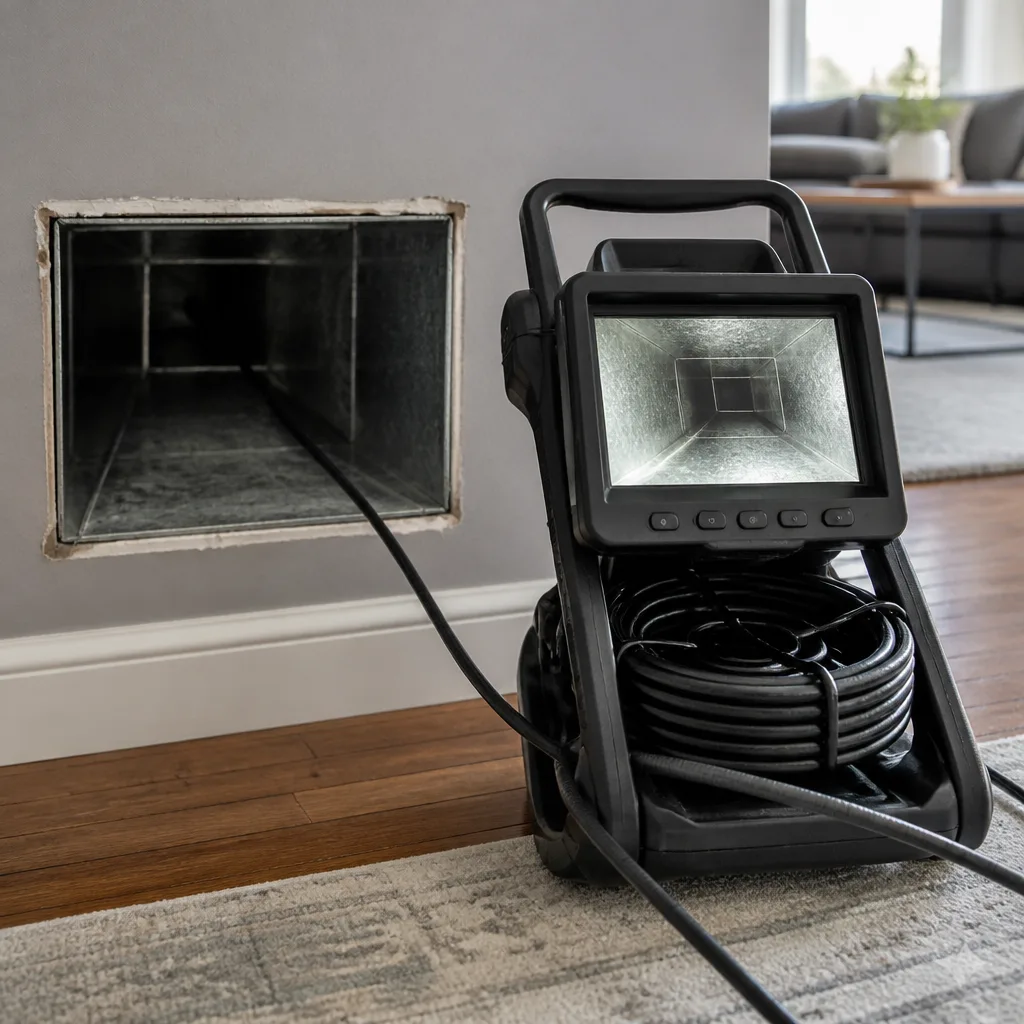 Camera inspection
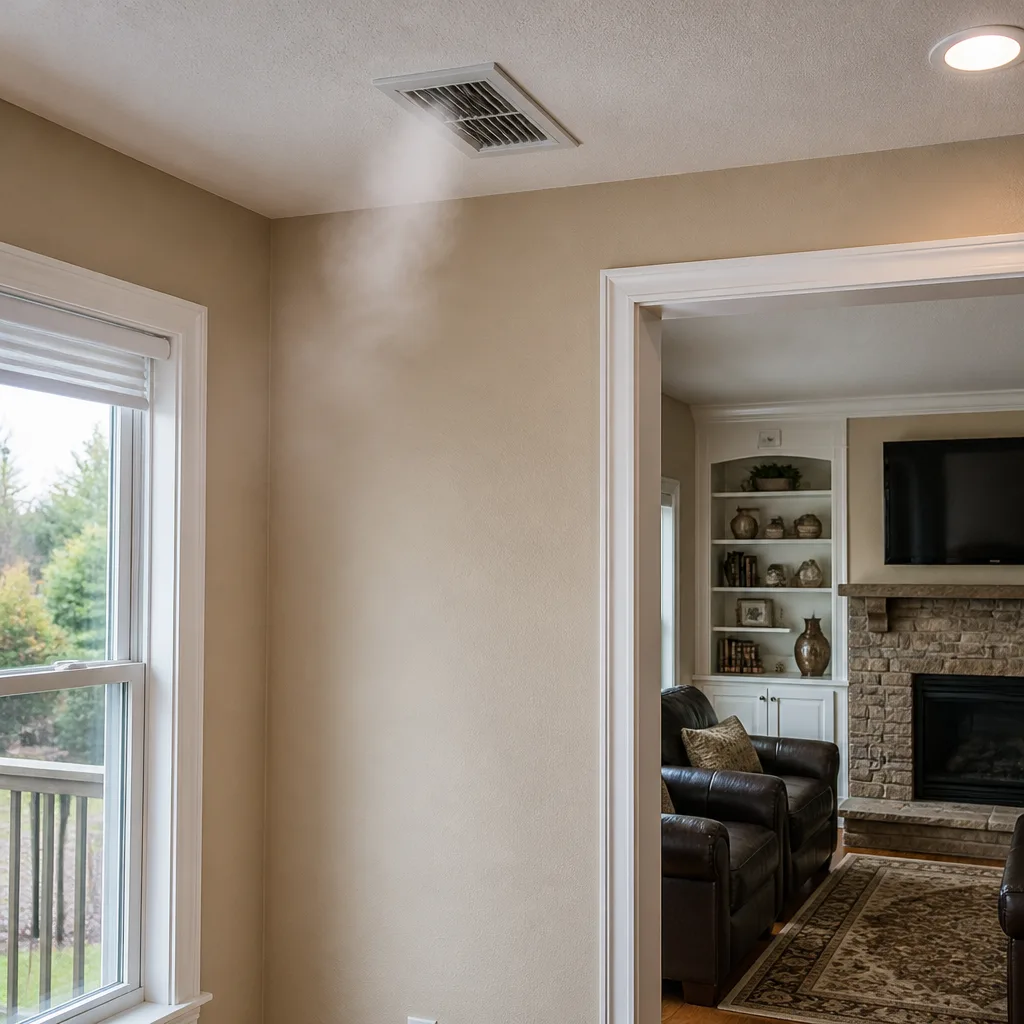 Sanitizing & deodorizing
Whole-system duct and dryer vent check with before-and-after photos - you see exactly what came out of your vents
That "$99 whole-house special" is a bait ad - the real number appears once they are in your hallway, or the "clean" is a shop-vac at the register. We photograph the inside of your ducts before and after instead.
Air Duct Cleaning Permits, Codes & Inspections in Erie, CO: What You Need to Know
Here’s the part most homeowners miss: the duct cleaning itself usually needs no permit in Erie, but the repair work that follows often does. The moment a technician cuts into ductwork to reach a collapsed flex run, replaces a section of trunk line, or seals a supply plenum with mastic, the job has crossed from maintenance into mechanical work covered by Colorado code. Most people don’t know that line exists until an inspector or a buyer’s agent asks about it. This guide walks through where the line sits, how Erie’s Weld County and Boulder County sides handle inspections differently, what documentation to keep, and how to ask a contractor for a scope-of-work letter that separates cleaning from repair.
Quick Answer
In Erie, CO, routine air duct cleaning does not require a permit, but duct repair, modification, replacement, or sealing of ductwork connected to your HVAC system generally falls under Colorado mechanical code and may require a municipal mechanical permit and inspection. Because Erie straddles Weld and Boulder counties, which jurisdiction issues your permit depends on which side of town you’re in. Sanitizing treatments that use registered chemical agents can also fall under Colorado Department of Agriculture pesticide rules. The simplest safeguard is a written scope-of-work letter from your contractor that labels each task as cleaning or repair.
Styles & brands we work with
- Whole-home duct cleaning
- Dryer vent cleaning
- Camera inspection
- Sanitizing & deodorizing
Table of Contents
- Where the Line Sits: Cleaning vs. Mechanical Repair
- What Colorado Mechanical Code Says About Ductwork
- Erie’s Weld and Boulder County Split and How Inspections Differ
- Duct Sealing Documentation for HOAs and Future Home Sales
- When Sanitizing Crosses Into Pesticide Registration Territory
- How to Request a Scope-of-Work Letter
- What a Mechanical Inspection Actually Checks
- Common Mistakes to Avoid
Where the Line Sits: Cleaning vs. Mechanical Repair
The difference between cleaning and repair comes down to whether the system’s physical components change. Cleaning removes what’s inside ducts without altering them. Repair changes the ducts themselves: cutting, replacing, resealing joints with mastic, resizing a run, or reconnecting a disconnected flex duct. That second category is mechanical work, and mechanical work in Erie goes through the permit process when it falls within the scope the code defines.
Here’s how to tell which category a task falls into:
- Cleaning only: dust and debris removal with negative-pressure equipment and rotary brushes. No cutting. No new materials installed. Generally no permit.
- Cleaning plus minor sealing of accessible joints: applying mastic or foil tape to exposed joints in a basement or crawlspace. Often treated as maintenance when no material is removed or added to the system’s capacity.
- Repair or modification: replacing a crushed flex run, cutting into a trunk line to add a supply, removing and reinstalling rigid duct, or reworking a plenum. This is typically permit territory.
- Full component replacement: swapping a section of ductwork or an air handler component. Almost always requires a mechanical permit.
In our experience running rotary equipment through older Erie homes, the surprise is how often a “cleaning” reveals something needing repair. A crushed flex duct behind drywall. A disconnected run in an attic. Mastic that’s cracked away from a supply plenum. When that happens, the honest next step is to pause and clarify with the homeowner that repair work needs a permit before anyone picks up a saw.
What Colorado Mechanical Code Says About Ductwork
Colorado adopts mechanical codes at the state level and cities and counties enforce them locally, with some variation. Ductwork that distributes conditioned air is defined as part of the mechanical system. That means work that alters, replaces, or extends that ductwork is generally treated as mechanical work subject to permit and inspection. Cleaning is not, because cleaning doesn’t alter the system.
A few principles translate across most Colorado jurisdictions:
- Alteration triggers permitting. If the work changes duct size, routing, material, or connections, expect a permit requirement.
- Maintenance is exempt. Cleaning, filter changes, and routine upkeep on an unchanged system typically don’t need a permit.
- The AHJ has final say. The Authority Having Jurisdiction, meaning your local building department, interprets the code for your address. When in doubt, call them and ask about the specific task.
- Inspections happen after the work. A mechanical inspection is not a checkbox before work starts; it verifies the work after it’s complete and visible.
For a full look at what cleaning involves without any alteration to the system, our air duct cleaning page covers the process from intake to final verification. Knowing the standard cleaning scope helps you recognize the exact point where a job shifts into repair work that needs a permit.
Erie’s Weld and Boulder County Split and How Inspections Differ
Erie is unusual because it sits across two counties. Addresses on the Weld County side go through Weld County’s building department for permits and inspections, while addresses on the Boulder County side go through Boulder County’s. The two departments follow the same state-level mechanical code but maintain separate permit systems, separate inspection scheduling, and occasionally different interpretations of edge cases.
Practical consequences for homeowners:
- Know your county before you call. Check your property records or your tax statement. Contractors who work Erie regularly will ask, but you should know the answer.
- Inspection scheduling differs. The permit is issued by the county, not the city, and the inspection timeline follows the county’s schedule.
- Newer Erie developments matter. Homes built within the last couple of decades, especially in the subdivisions around the Erie Community Center and along the Boulder County side, are more likely to sit inside active HOA boundaries with their own documentation requirements on top of county permits. Older homes closer to Historic Old Town tend to fall outside HOA review but often have ductwork that predates modern sealing standards, so repair needs surface more often.
- Municipal and county overlap. Even where the Town of Erie has its own building department functions, the county footprint still governs where your permit is filed. Don’t assume the town handles everything just because you have an Erie mailing address.
Climate in this stretch of the Front Range matters too. Erie swings between dry summer heat and hard winter cold, and that cycle works joints and seams over the years. Duct tape that held in 2015 cracks by 2026. When a technician finds seams that have failed, that’s not a cleaning task; that’s a repair task, and the county is the one watching the permit.
Duct Sealing Documentation for HOAs and Future Home Sales
Duct sealing is where documentation separates a smooth home sale from a messy one. In Erie’s HOA-heavy neighborhoods, exterior modifications get tracked because they’re visible. Interior mechanical work matters for a different reason: it shows up in disclosure forms when you sell. If a buyer’s agent asks whether mechanical work was permitted, and there’s no permit on file, you don’t have a good answer.
What proper sealing documentation should include:
- Before-and-after photos of the sealed areas. Photos of the joints sealed, the mastic applied, and the finished connections.
- A scope-of-work statement listing each sealed seam or replaced component and the material used.
- The permit number if a permit was pulled for any portion of the work.
- The inspection sign-off once the county has approved the work.
For HOA compliance specifically, the review usually zeroes in on anything that affects the exterior or the shared building envelope. Duct sealing in an attic or crawlspace may fall under HOA architectural review if it involves visible additions. Ask your HOA board what documentation they want before work starts. A written scope letter handles most of it, but HOAs sometimes want their own form signed, and knowing that up front saves a second conversation later.
When Sanitizing Crosses Into Pesticide Registration Territory
Sanitizing treatments get complicated fast. Some products are EPA-registered antimicrobials. Others contain active ingredients regulated as pesticides under Colorado Department of Agriculture rules. The distinction matters because applying a pesticide in a residential setting as part of a paid service typically requires that the product and the applicator fall within state registration requirements.
How to keep this clear:
- Ask what product is being used, by name. Then ask whether it’s registered with the EPA and whether the state requires anything additional for the application.
- Ask whether the applicator holds the credentials Colorado requires for pesticide application. If the product is strictly a cleaning-grade sanitizer rather than a pesticide, different rules apply, but confirm which category it falls into.
- Get the product data in writing before treatment, especially if anyone in the home has asthma or chemical sensitivity.
- Don’t accept “we always sanitize” as an answer. The right question is which product, at what concentration, and under what regulatory umbrella.
This is one of the reasons we use identified professional products from Honeywell, Aprilaire, and Abatement Technologies in our air quality work rather than a generic fogging agent. Naming the product and its regulatory status is easier when the product line is known. It’s also the sort of thing that should appear on the scope-of-work letter so there’s no ambiguity later.
How to Request a Scope-of-Work Letter
A scope-of-work letter does one job: it separates cleaning tasks from repair tasks so you, the county, your HOA, and any future buyer can all see which was which. Ask for it before any work starts. A contractor who resists giving one in writing is telling you something worth hearing.
Here’s how to request one that actually holds up:
- Ask in writing, before you schedule. An email or text that says “Please send a written scope of work before we schedule” is enough.
- Require a two-column structure. One column for cleaning (tasks that don’t alter the system) and one for repair (tasks that do). Every line item should land in one column or the other.
- Require the permit status for each repair item. “Will be permitted through Weld County” or “will be permitted through Boulder County” or “no permit required because no alteration.”
- Require product names for any sanitizing treatment and the regulatory category each product falls into.
- Ask for it to be signed by the company. Not an informal message, a signed document.
- File it with your home records. If you sell in three years, this document becomes part of your disclosure package.
A good scope letter also helps you compare quotes honestly. When two companies quote different totals, the scope letters tell you whether one is including repair work the other is silently leaving out. For the parts of the job that don’t need a permit, our HVAC cleaning page shows what a full component-level cleaning includes so you can see that portion on the scope side by side.
What a Mechanical Inspection Actually Checks
A mechanical inspection verifies that permitted work was done to code. It’s not a quality review of your cleaning, and the inspector doesn’t care whether your ducts are spotless. What the inspector cares about is whether the ducts are connected, sealed, and sized correctly for the system they serve.
Typical items an inspector looks at on duct-related work:
- Connections. Ducts securely attached to the air handler, plenum, and terminal points, with appropriate mechanical fasteners.
- Sealing. Joints sealed with code-approved materials and methods, especially at the plenum and any newly cut seams.
- Support and routing. Duct runs properly supported and routed, not crushed against joists or resting on ceiling insulation.
- Material compatibility. Replacement duct material appropriate for the application, with correct rating for the environment it passes through.
- Clearance. Required clearances from heat sources and combustible materials.
What to do before the inspection:
- Confirm the work is fully visible. If sealing is hidden behind freshly installed drywall, the inspector may not be able to verify it. Coordinate drywall timing with the county.
- Have the permit number and scope on hand. The inspector needs to match the work to the permit.
- Be present or send someone. Questions come up during the walk-through, and a same-visit answer beats a reinspection.
- Keep the sign-off document. It goes in the same file as your scope letter and photos.
For dryer vent work, which has its own fire-safety significance and often differs from duct inspection handling, our dryer vent cleaning page walks through the vent-side process. Dryer vents are core to our service, not an add-on, because a clogged vent is one of the leading household fire hazards.
Common Mistakes to Avoid
- Assuming a permit doesn’t apply because the job “started as cleaning.” If the technician cuts into a duct run, the permit question is live even if the appointment began as a clean. Ask before the cut, not after.
- Calling the Town of Erie when the county is the issuer. Erie straddles Weld and Boulder counties, and permits typically go through the county building department. Confirm which county your address sits in before you pick up the phone.
- Accepting an oral scope. “We’ll just handle it” isn’t documentation. Get the scope in writing, or you have nothing to show at resale or for HOA review.
- Skipping the permit to save time. Mechanical work without a permit surfaces at inspection time during a sale, and you’ll be the one paying for the fix and the retroactive permit. It’s a worse deal than doing it properly the first time.
- Ignoring pesticide registration for sanitizing products. Colorado Department of Agriculture rules apply to certain active ingredients. Ask which regulatory category the product falls into rather than trusting the word “sanitize” on an invoice.
- Forgetting to photograph sealing before drywall goes up. Once it’s covered, you can’t prove it exists. Photos and inspector sign-off together are the proof.
- Treating HOA requirements as separate from county requirements. Both apply, and they cover different ground. Clear the county permit and the HOA review in parallel, not in sequence.
See the difference
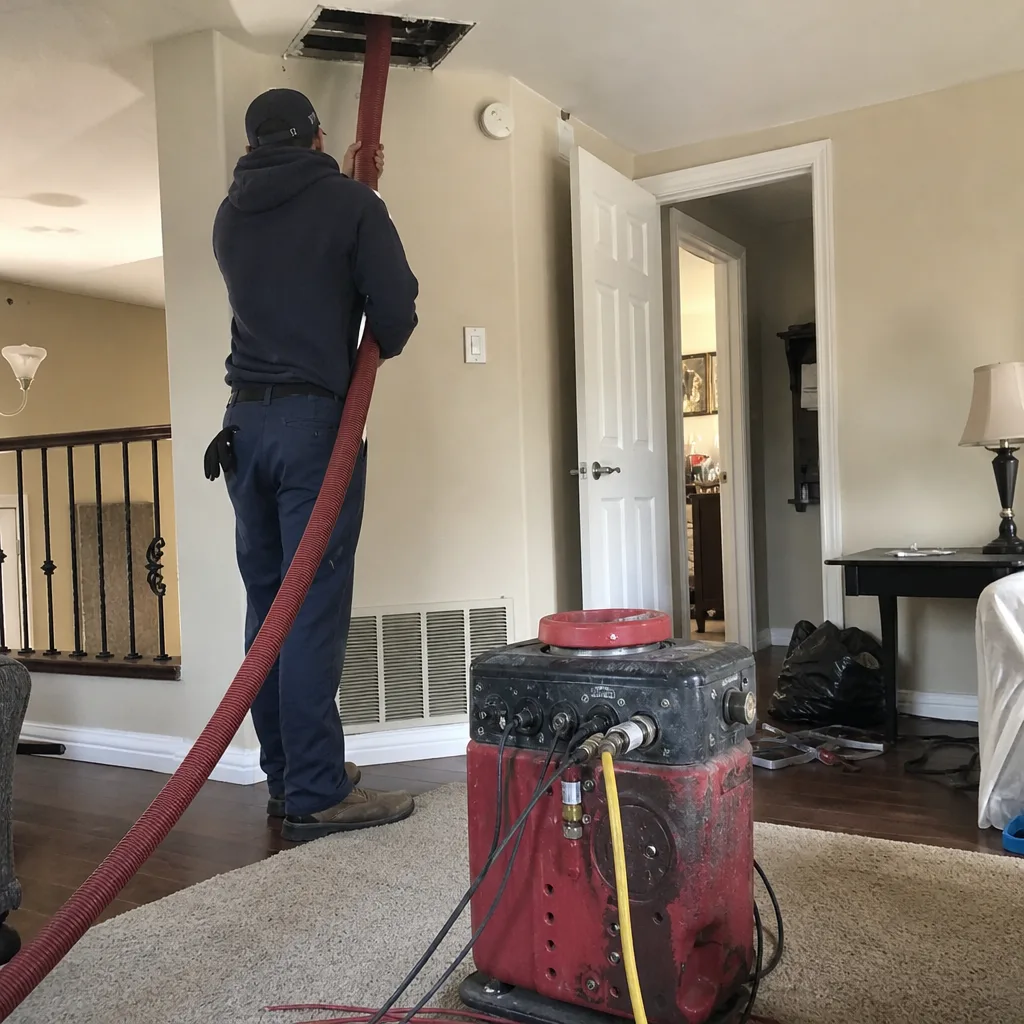 Before
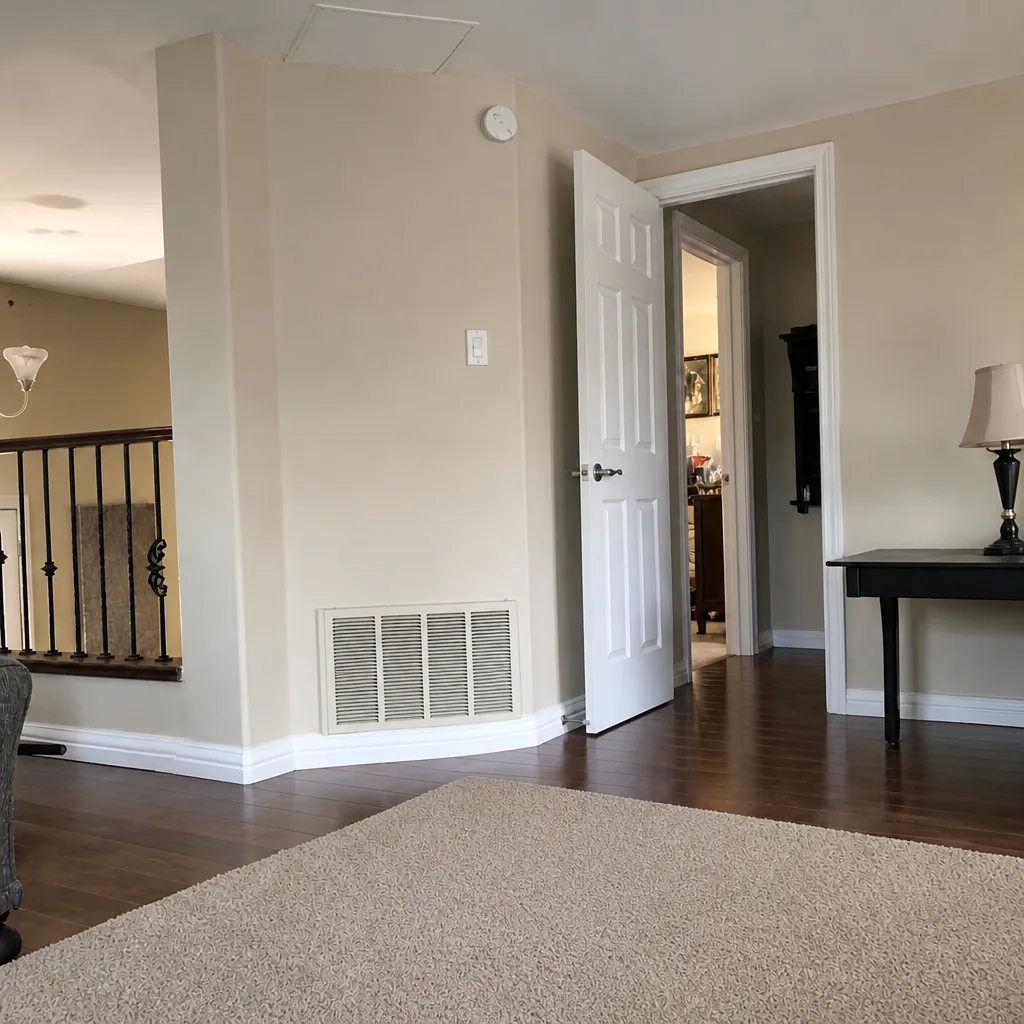 After
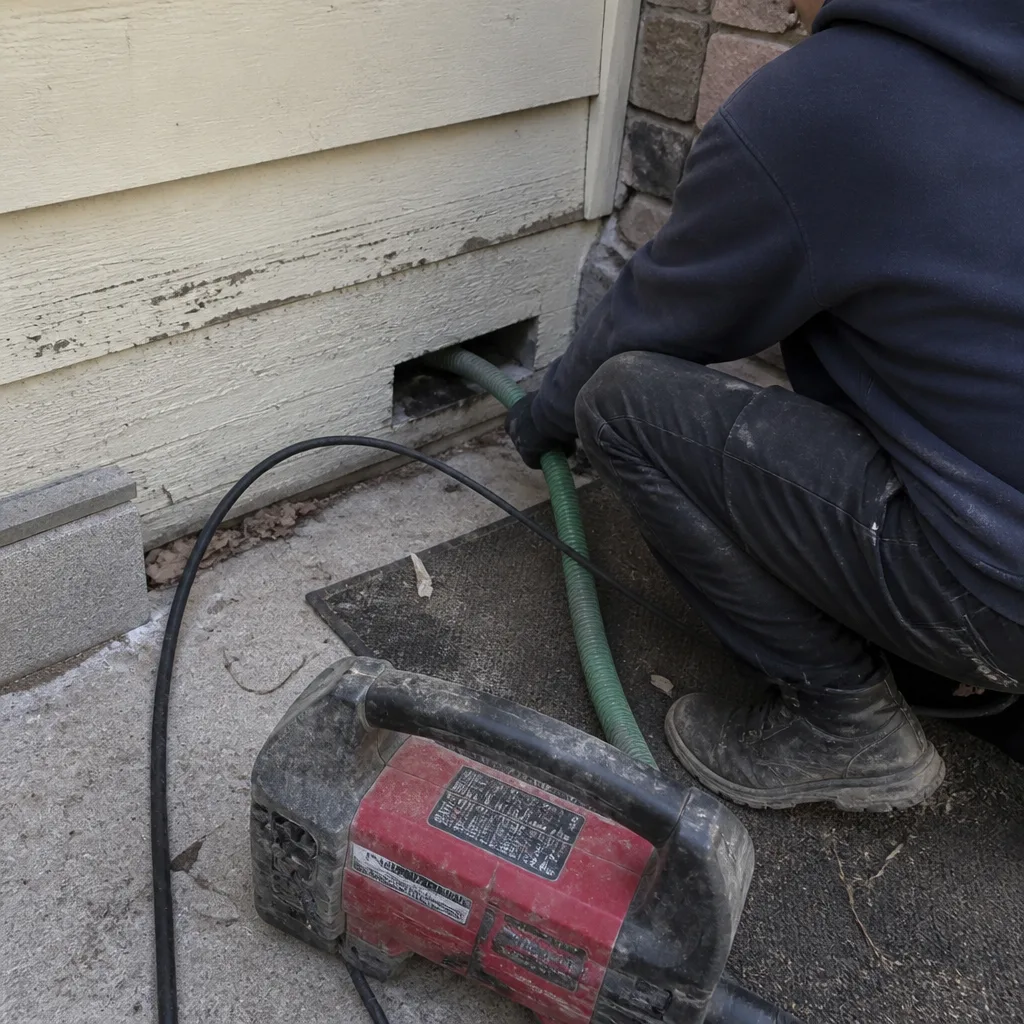 Before
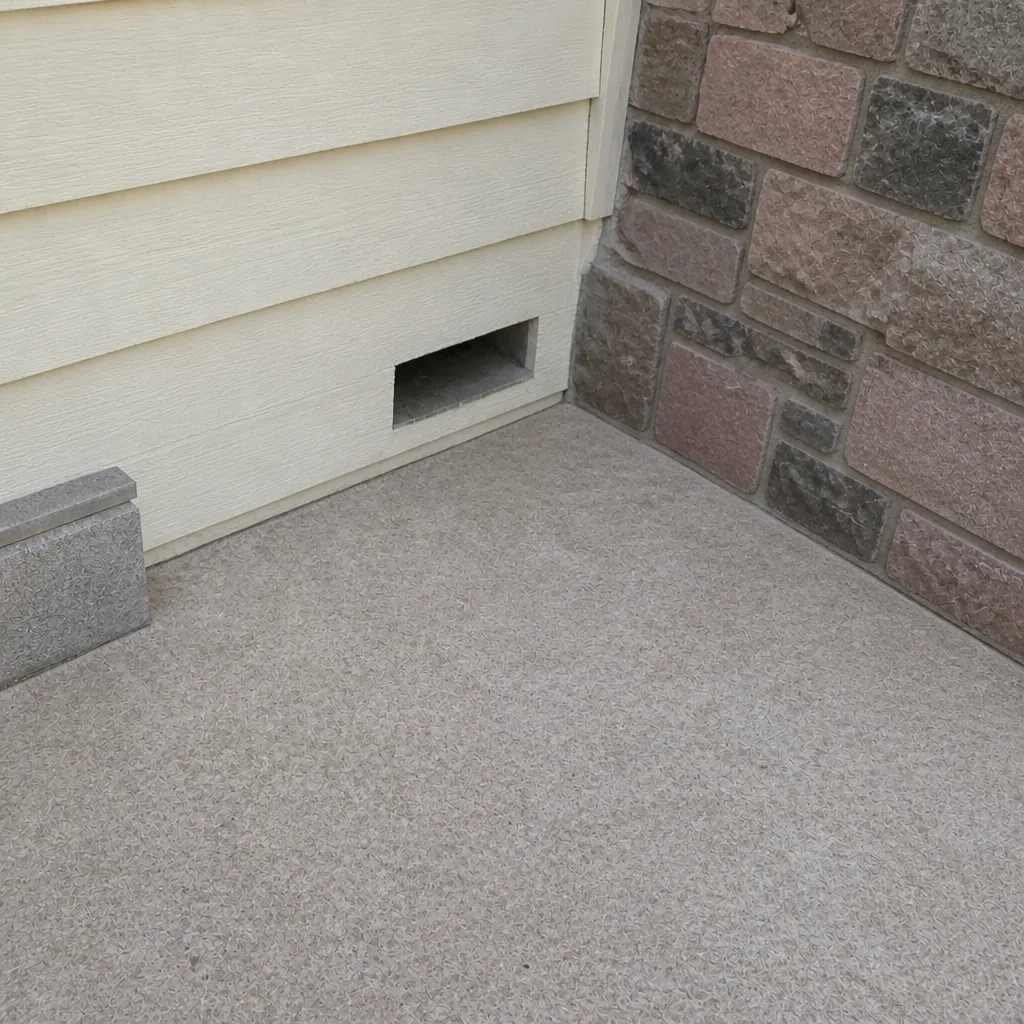 After
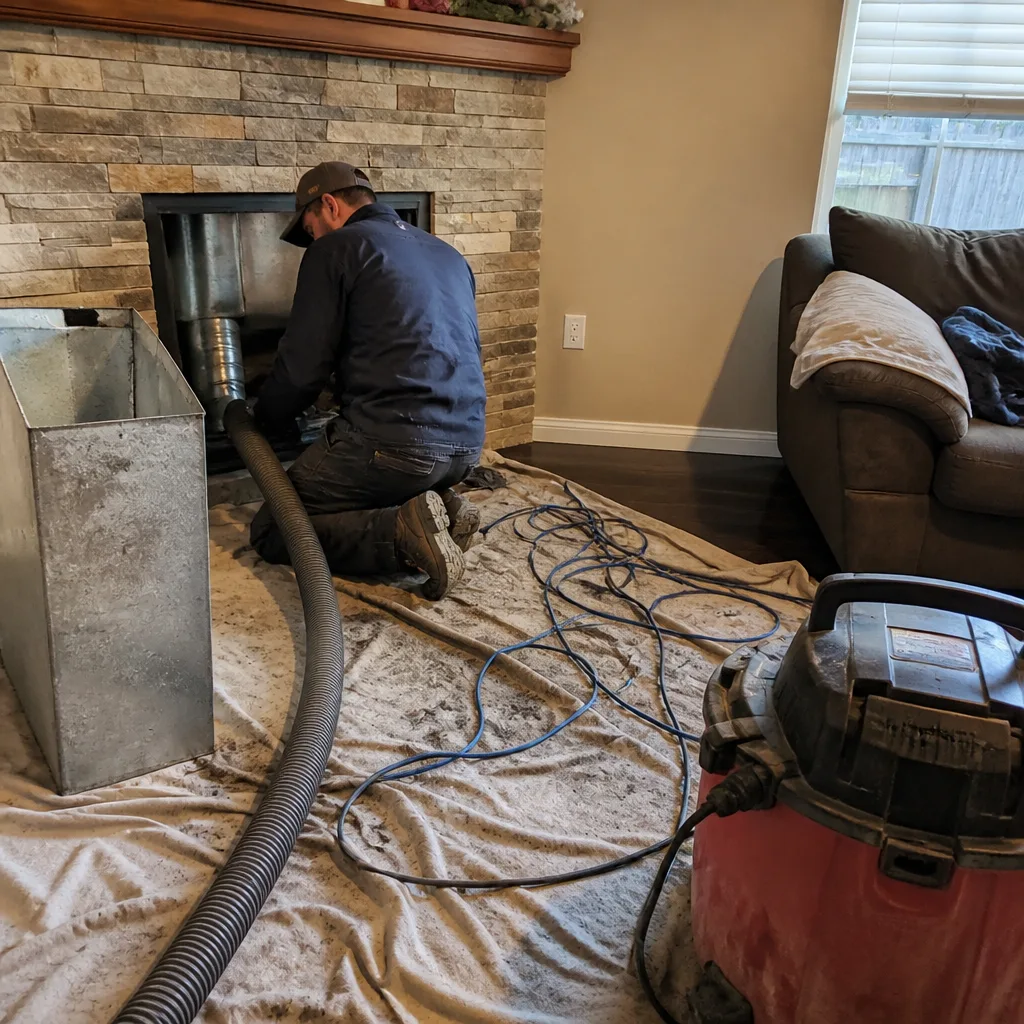 Before
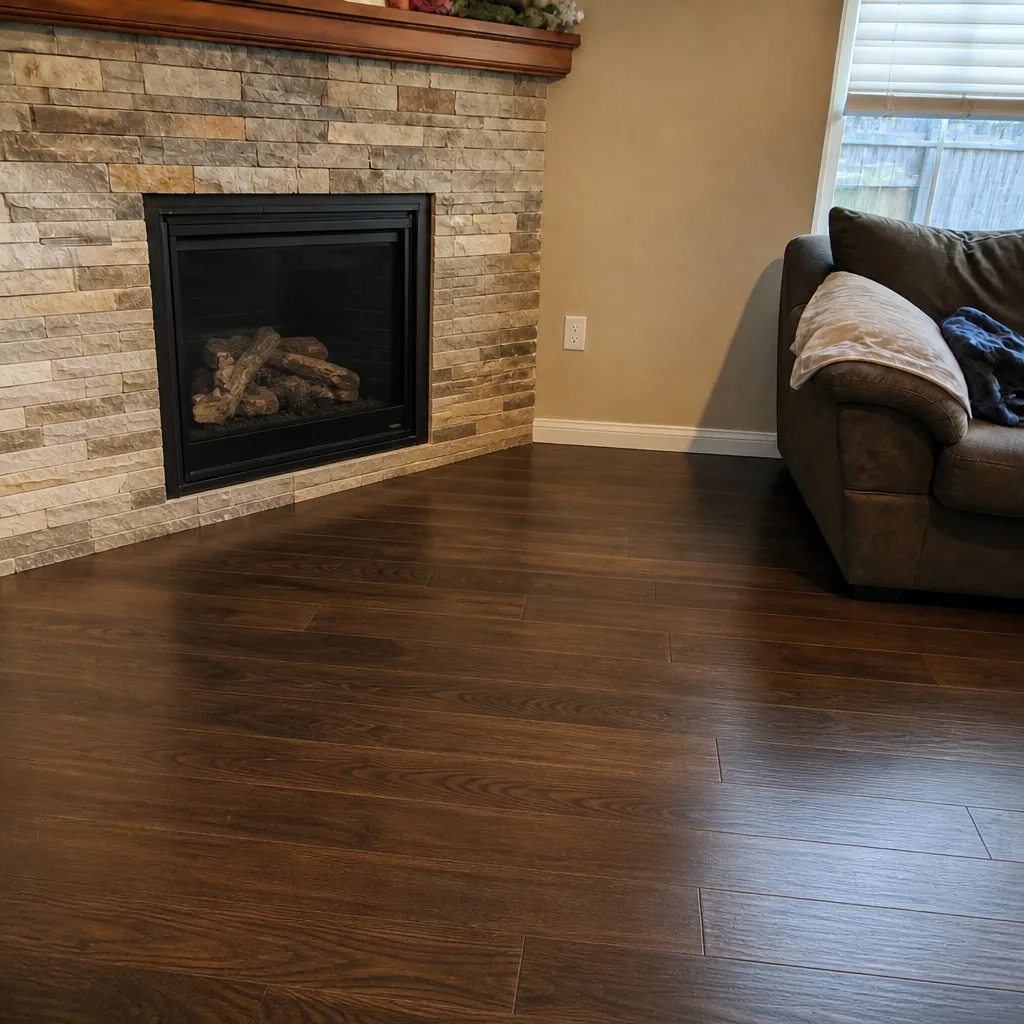 After
When to Call a Professional
Call a professional when a duct-cleaning inspection turns up physical damage: crushed or disconnected flex runs, torn seams, mastic that’s failed along a plenum, or rusted metal duct on an older Erie home. Those find-and-repair situations need someone equipped to seal and repair on the same visit rather than hand you a note for a second contractor to handle later. Call us when you’re not sure whether a planned task crosses the permit line, because a scope-of-work letter settles that question before the work starts. Call us when sanitizing is part of the plan, so the product and its regulatory status get named up front. Erie Air Duct Cleaning Pros offers free estimates in Erie – call (877) 676-7132. We answer 24/7, and fast dispatch runs from 7am to 7pm, Sunday through Friday.
Frequently Asked Questions
No, routine air duct cleaning generally does not require a permit in Erie because the work doesn’t alter the system. The moment the work involves cutting into ductwork, replacing components, or installing new sealing materials that change the system, you’re typically into mechanical permit territory. When a task is borderline, call the building department for the county your address sits in and describe the exact work. Call (877) 676-7132 if you want a free estimate and a written scope-of-work letter that separates the two categories clearly.
It depends on which side of Erie your property sits on: Weld County or Boulder County. Erie spans both, and each county maintains its own building department, permit system, and inspection schedule. Check your property tax statement or county assessor record to confirm. A contractor who works Erie regularly will ask you the question up front rather than assume – and you should have the answer ready.
It depends on the scope. Sealing an accessible joint with mastic or foil tape during cleaning is generally treated as maintenance and typically needs no permit. Sealing that involves cutting open ductwork, sealing a plenum joint where the connection has failed, or making sealing part of a repair to restore system integrity is generally permit-level work. Getting that distinction on paper before work starts is what protects you at inspection and resale time. Call (877) 676-7132 for a free estimate – we’ll walk through which side of that line your job falls on.
Some do, some don’t, depending on the active ingredients. Products that function as pesticides under the state’s definition may fall under Colorado Department of Agriculture registration requirements for both the product and the applicator. Products that are purely cleaning-grade sanitizers fall under a different set of rules. Ask your contractor to name the specific product and confirm its regulatory category in writing before treatment.
Keep four things: the scope-of-work letter signed by the contractor, before-and-after photos of every sealed and repaired component, the permit number for any work that required a permit, and the county inspection sign-off once the work has been approved. Those four documents together answer every question a buyer’s agent, an HOA board, or a future contractor will have. Store them with your home records, not in a drawer that gets cleaned out with the receipts.
Ask for before-and-after photos of your own ducts, not stock images, and a written report that lists each component cleaned. For repair work, the county inspection sign-off is the independent verification. For cleaning alone, the photos are your record. Any company that hedges on providing these is one to think twice about. Call (877) 676-7132 for a free estimate and we’ll send a sample scope-of-work letter so you can see what full documentation looks like before you book.
The Bottom Line
Air duct cleaning in Erie doesn’t need a permit. Duct repair and modification usually does. The dividing line is whether the work changes the physical system, and it comes up more often than homeowners expect because cleaning frequently reveals repair. Erie’s split between Weld and Boulder counties means permit filing goes through the right county building department, not the town. Sanitizing products can fall under Colorado Department of Agriculture rules, so get the product name and category in writing. A scope-of-work letter signed before work starts ties all of this together, protects you at HOA review, and lands in your home-sale disclosure file ready to go. That’s the paperwork side. The work side is where the right equipment and process matter, and we’re set up for both. Whether you’re comparing estimates or scheduling the first walk-through, we’re glad to talk it through.
Call (877) 676-7132 for a free estimate. We answer 24/7, with fast dispatch from 7am to 7pm, Sunday through Friday.
Written by the team at Erie Air Duct Cleaning Pros.